
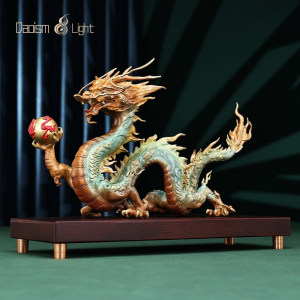
 Daoism Light Brass Dragon Statue with Pearl Desk Decor
 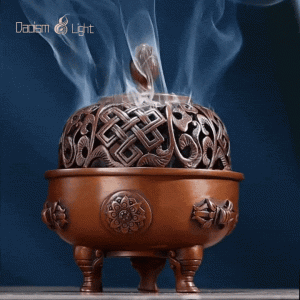 Daoism Light Purple Copper Lotus Incense Burner Tea Room Decor
 Daoist Symbols
What Is Pixiu? Meaning, Story, Symbolism & Feng Shui Guide
What Is Pixiu? Learn the meaning, mythology, symbolism, feng shui rules, bracelet wearing customs, materials, and cultural use of Pixiu in Chinese culture.
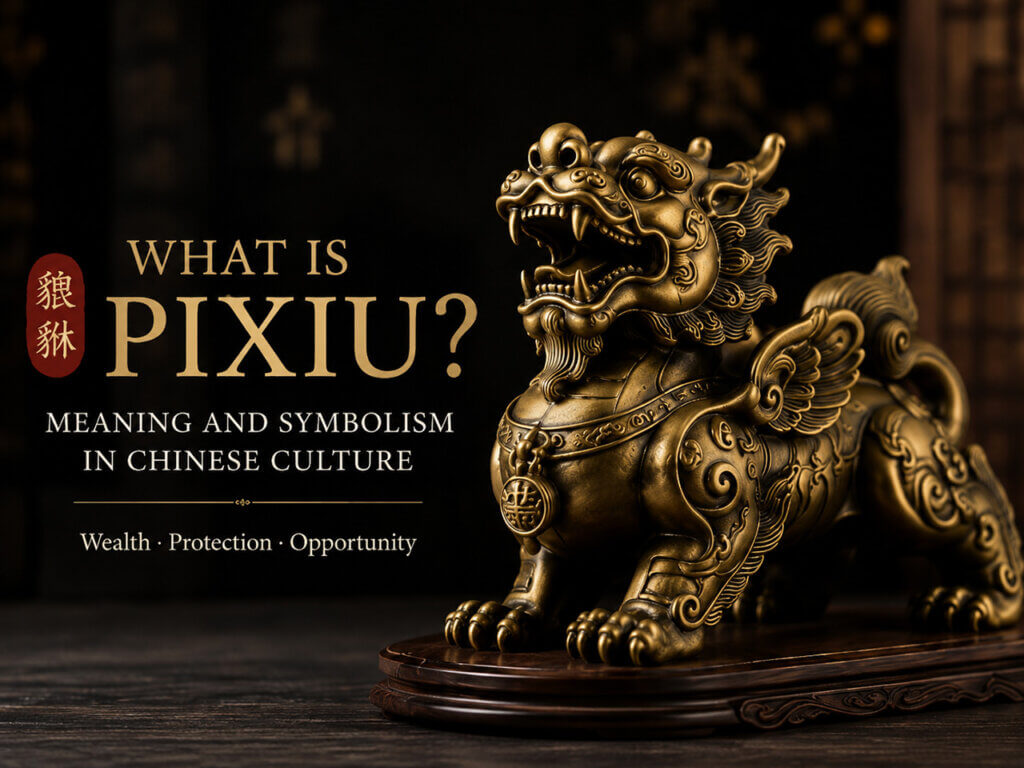
What Is Pixiu? Meaning and Symbolism in Chinese Culture
What Is Pixiu? In Chinese culture, Pixiu is a mythical guardian creature associated with wealth, protection, opportunity, and the careful keeping of good fortune. It is commonly seen in feng shui jewelry, bracelets, pendants, keychains, home ornaments, and symbolic decor.
At first glance, Pixiu may look like a dragon, a lion, or a powerful guardian beast. That impression makes sense. Pixiu is usually shown with a dragon-like head, a strong animal body, an open mouth, and sometimes wings. In Chinese symbolism, it represents strength, guarded abundance, and the wish to welcome positive opportunities while protecting what has already been gained.
A balanced way to understand Pixiu is as a cultural symbol of protection, opportunity, discipline, and mindful prosperity.
What Is Pixiu in Chinese Culture?
Pixiu, written as 貔貅 in Chinese, is a legendary creature from Chinese mythology and folk tradition. It is widely known as an auspicious guardian connected with wealth, protection, and the ability to hold onto good fortune.
In many traditional explanations, Pixiu is described as a creature that enjoys treasures such as gold, silver, and jewels. Because of this, it became closely connected with the idea of attracting wealth and keeping it from flowing away.
If understood in a way that feels closer to modern life, Pixiu is a cultural reminder to recognize opportunity, value what has been earned, and manage life and resources with steadiness.
This is why Pixiu continues to appear in Chinese-inspired jewelry, feng shui objects, home decor, business gifts, and personal accessories today.
The Mythology Behind Pixiu
One reason Pixiu is so strongly connected with wealth is its well-known mythological story.
In a popular folk tale, Pixiu was a powerful celestial creature with an enormous appetite for gold, silver, and jewels. Because it ate only treasures, it became associated with collecting wealth. The story also says that after Pixiu broke a heavenly rule, the Jade Emperor punished it by sealing its ability to release what it had consumed. From this tale came the famous symbolic idea that Pixiu can “take in wealth but not let it out.”
This story should be understood as folklore rather than historical fact. Still, it explains why Pixiu became such a recognizable Chinese wealth symbol. Its meaning is not only about gaining more, but also about preserving, protecting, and managing what has already been received.
For readers new to mythical creatures in China, this story also shows how Chinese symbolism often works: a visual creature, a memorable story, and a practical life message are woven together.
Male vs. Female Pixiu: Tianlu and Bixie
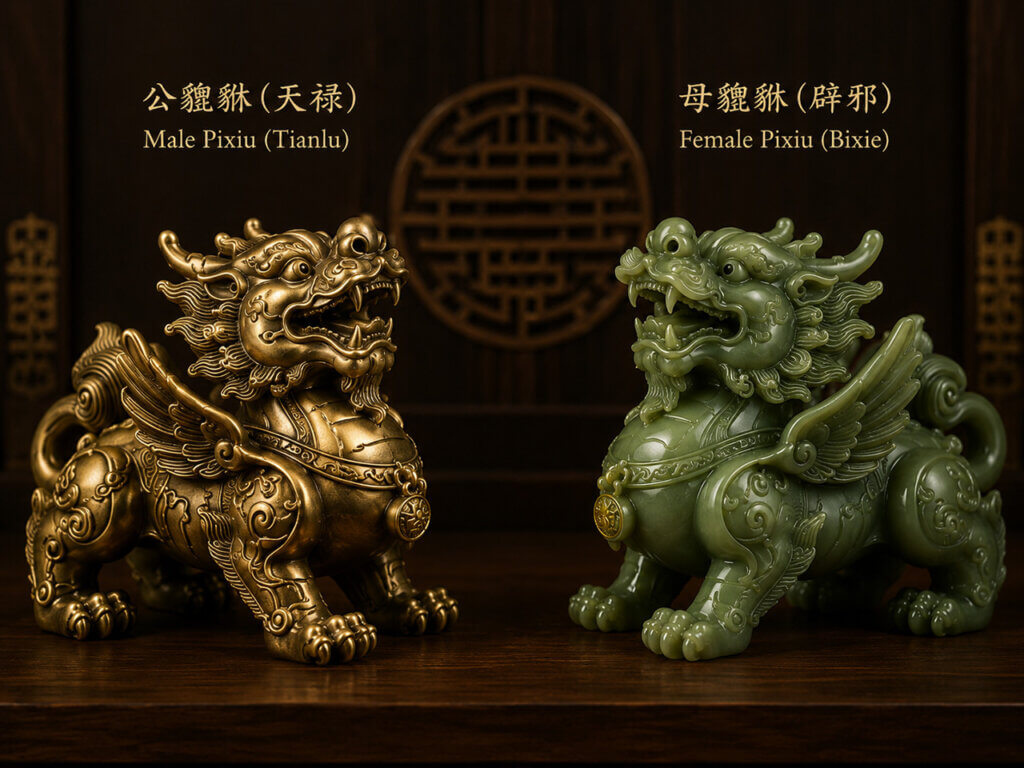
In some traditional Chinese feng shui interpretations, Pixiu can also be understood through a male and female pair.
Male Pixiu: Tianlu
The male Pixiu is often called Tianlu. It is commonly associated with attracting wealth, opportunity, and external fortune. In symbolic terms, Tianlu represents movement, pursuit, and the ability to bring resources in.
Female Pixiu: Bixie
The female Pixiu is often called Bixie. It is more closely connected with protection, guarding, and keeping fortune safe. In symbolic terms, Bixie represents stability, preservation, and the ability to protect what has already been gained.
Why the Pair Matters
Together, Tianlu and Bixie express a balanced idea of abundance: attracting opportunity and protecting what has been earned.
This is why some Pixiu designs appear as a pair, especially in home decor or feng shui ornaments. For jewelry, a single Pixiu is more common and is usually chosen for its overall meaning of prosperity and protection.
The Meaning of Pixiu
The meaning of Pixiu can be understood through three main layers: wealth, protection, and disciplined energy.
Wealth and Prosperity
Pixiu is best known as a symbol of wealth and abundance. In traditional belief, its connection with treasure makes it a popular motif in bracelets, pendants, keychains, and home ornaments.
A thoughtful interpretation is that Pixiu represents the wish to welcome opportunity while protecting what one already has.
This makes Pixiu meaningful for people starting a business, building a career, entering a new life stage, or becoming more intentional about money and personal resources.
Pixiu is not the only Chinese wealth symbol with a long cultural background. To compare another well-known motif, you may also read our guide to Five Emperor Coins meaning in Chinese culture.
Protection and Guarding Energy
Pixiu is also a guardian symbol. Its fierce appearance is not meant to feel frightening. Instead, it expresses strength, alertness, and protection.
In Chinese symbolic design, guardian creatures are often placed near entrances, worn close to the body, or carried as small ornaments. Their purpose is to create a sense of symbolic stability and protection.
For modern use, Pixiu can serve as a reminder to protect your energy, your boundaries, your work, and your long-term goals.
Preservation and Careful Stewardship
One of the most distinctive ideas behind Pixiu is preservation. Unlike symbols that focus only on luck, Pixiu also points to the careful keeping of what has already been gained.
This gives Pixiu a practical meaning: abundance should be protected, managed, and used with awareness.
What Does Pixiu Look Like?
Pixiu is usually shown as a strong mythical animal with several recognizable features.
Dragon-Like Head
Pixiu often has a dragon-like head, which gives it a sense of power, dignity, and auspicious energy. In Chinese culture, dragon imagery is strongly connected with vitality, movement, and authority.
Lion-Like Body
Its body often resembles a lion or guardian beast. This gives Pixiu a stable, protective, and commanding appearance.
Open Mouth
Many Pixiu designs show the creature with an open mouth. Symbolically, this is connected with drawing in treasure, blessings, or positive opportunities.
Wings or Wing-Like Forms
Some traditional and modern depictions include wings. These suggest agility, movement, and a celestial quality.
Strong Claws and Grounded Posture
Pixiu often appears with strong claws, a compact body, and a firm posture. These details reinforce the meaning of guarding, holding, and protecting.
Pixiu Symbolism: Why It Matters
Pixiu remains popular because its symbolism feels both ancient and surprisingly relevant.
A Symbol of Opportunity
Pixiu is not only about money. It can also represent opportunity, momentum, and readiness.
People may choose Pixiu when they are beginning a new chapter, launching a project, starting a business, or hoping to move forward with more confidence.
A Symbol of Protection
The guardian nature of Pixiu makes it suitable for people who want a meaningful object that feels strong and steady.
It can be worn or displayed as a reference point for steadiness, focus, and protection.
A Symbol of Responsible Abundance
Pixiu also reminds us that abundance is not only about receiving more. It is also about using resources wisely and keeping life in balance.
This is where Pixiu becomes especially meaningful in a Daoist-inspired lifestyle. Daoist thought often values balance, moderation, flow, and natural alignment.
To understand how Pixiu fits into a wider symbolic language, it can also help to explore Bagua and Yin Yang symbolism, where balance, movement, and harmony are expressed through more abstract forms.
Pixiu and Feng Shui
Pixiu is often connected with feng shui, especially in relation to wealth energy and protective placement.
In traditional feng shui practice, Pixiu may be placed in homes, shops, offices, or worn as jewelry. The general idea is that Pixiu faces outward to receive opportunities and guard the space.
For a modern home, the most important point is thoughtful placement. A Pixiu ornament should feel visually balanced, respectful, and intentional.
For a broader understanding of why placement, balance, and intention matter in Chinese spatial culture, you may also enjoy our guide on how Daoism philosophy influences feng shui.
Common Modern Placement Ideas
Entryway
A Pixiu ornament near an entryway can symbolize welcoming opportunity and guarding the home.
Office or Work Desk
A small Pixiu figure on a desk can represent business focus, career growth, and financial discipline.
Living Room Shelf
Placed on a clean shelf, Pixiu can work as a cultural decor piece with meaning, not just a decorative object.
Personal Carry
Pixiu keychains, bracelets, and pendants are popular because they keep the symbol close in daily life.
How to Wear Pixiu Jewelry
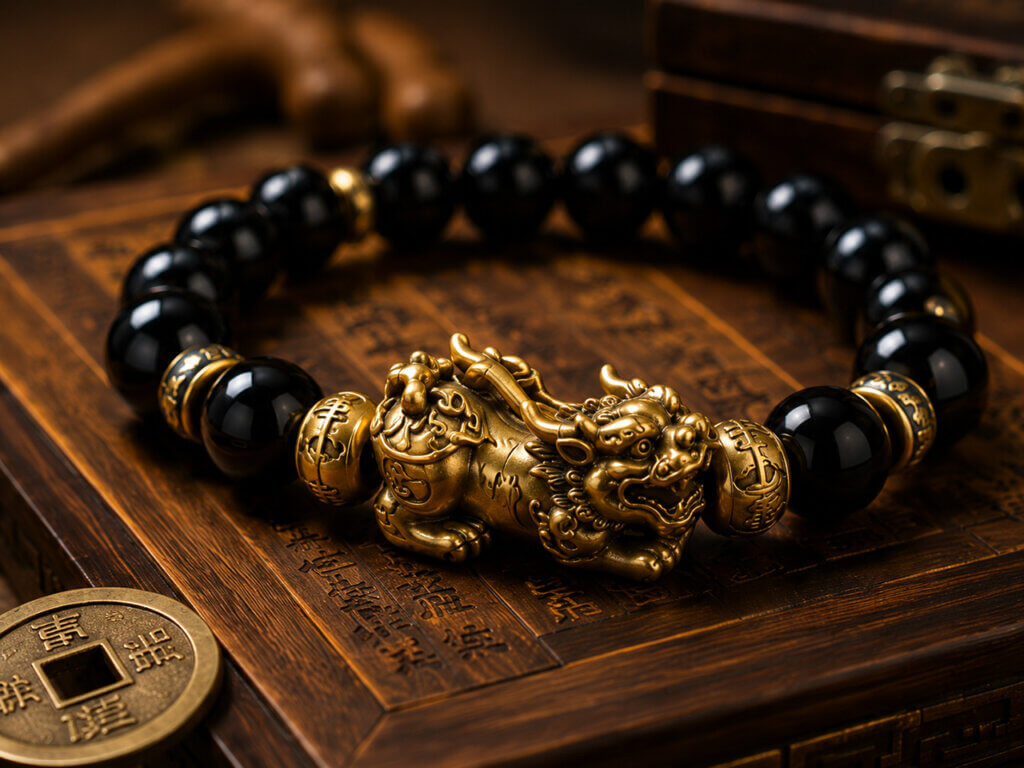
Pixiu jewelry is one of the most common modern forms of this symbol. Bracelets, pendants, rings, and keychains make Pixiu easy to carry.
Pixiu Bracelet Meaning
A Pixiu bracelet usually symbolizes attracting opportunity, protecting wealth, and keeping one’s personal energy steady. Because it is worn close to the body, it is one of the most personal and popular ways to carry the Pixiu symbol.
Many people choose Pixiu bracelets during moments of change, such as starting a business, entering a new career stage, or becoming more intentional about money and life direction. For modern wearers, a Pixiu bracelet can be both a meaningful accessory and a daily cue for focus, confidence, and careful intention.
Which Hand Should You Wear a Pixiu Bracelet On?
One common question about Pixiu bracelets is whether they should be worn on the left hand or the right hand.
In traditional feng shui belief, the left hand is often associated with receiving, while the right hand is associated with releasing. Because Pixiu is connected with attracting and keeping good fortune, many traditional guides suggest wearing a Pixiu bracelet on the left hand.
For modern wearers, comfort, personal habit, and daily lifestyle also matter. If wearing Pixiu on the left hand feels natural, it can follow the traditional meaning of welcoming opportunity. If another way feels more practical, the symbolic value can still come from the intention behind wearing it.
Some traditions make an exception for black obsidian bracelets, which are sometimes worn on the right hand because obsidian is associated with grounding and releasing negative energy. Since customs may vary by region and belief system, the most respectful approach is to understand the tradition while choosing what fits your daily life.
Pixiu Pendant Meaning
A Pixiu pendant carries the symbol close to the body. It can represent protection, personal strength, and grounded ambition.
It also works well for people who prefer a quieter form of symbolic jewelry. Compared with a bracelet, a pendant can feel more subtle and easier to match with everyday outfits.
Pixiu Keychain Meaning
A Pixiu keychain is often chosen for daily carry. It works especially well for people who like symbolic objects but prefer something practical, subtle, and easy to use every day.
A Pixiu keychain can be attached to keys, bags, car keys, or work accessories, making it a simple way to keep the symbol close without wearing jewelry.
Pixiu Rules and Taboos: Things to Know
Many people searching for Pixiu benefits or feng shui rules for Pixiu also want to know what to avoid. These customs vary by region and tradition, but the following ideas are commonly mentioned.
Avoid Letting Others Touch the Eyes and Mouth
In traditional belief, Pixiu’s eyes are associated with finding treasure, while its mouth is associated with receiving wealth. For this reason, some customs suggest avoiding casual touching of the eyes and mouth by other people.
Touch Pixiu Respectfully
Some people like to gently touch Pixiu from head to body as a way of connecting with the symbol. This is usually done by the owner, not casually by others. The idea is less about fear and more about respect for the object’s symbolic role.
Keep Pixiu Clean and Well Placed
Whether worn as jewelry or displayed at home, Pixiu should be kept clean, undamaged, and placed with care. A dusty, neglected, or visually cluttered placement weakens the feeling of intention.
Do Not Place Pixiu Carelessly
For home decor, avoid placing Pixiu in messy corners, directly on the floor, or in areas where it feels visually disrespected. A clean shelf, entryway console, or office desk is usually more suitable
How to Cleanse and Care for Pixiu
People often ask how to cleanse, charge, or care for Pixiu. The answer depends on whether you are approaching it as a spiritual object, a cultural symbol, or a piece of jewelry.
Gentle Physical Cleaning
For daily care, use a soft dry cloth to wipe away dust, sweat, or fingerprints. If the Pixiu piece is made of brass, copper, jade, or stone, avoid harsh chemicals unless the material specifically allows it.
Traditional Cleansing Methods
Some people use moonlight, incense, sound, or quiet intention as symbolic cleansing methods. These practices are personal and cultural rather than required. If they help you feel more connected to the object, they can be used gently and respectfully.
Be Careful with Water and Chemicals
Avoid soaking Pixiu jewelry in water unless the material is known to be safe. Brass and copper can naturally darken over time, while some stones, cords, and plated finishes may be damaged by water, perfume, soap, or cleaning products.
Store It with Respect
When not wearing Pixiu jewelry, place it in a clean pouch, jewelry box, or dedicated space. This protects the material and also keeps the symbolic feeling of the piece intact.
Pixiu vs Dragon: What Is the Difference?
Pixiu is sometimes confused with the Chinese dragon because it can have dragon-like features. However, the two symbols are not the same.
Dragon
The Chinese dragon usually represents power, vitality, transformation, imperial authority, and cosmic movement.
Pixiu
Pixiu is more specifically connected with protection, wealth guarding, and the preservation of fortune.
In simple terms, the dragon is a broad symbol of powerful life force, while Pixiu is a more focused guardian of prosperity and protection.
Pixiu vs Chinese Guardian Lion
Pixiu may also be confused with Chinese guardian lions, often seen at entrances of temples, buildings, restaurants, and homes.
Guardian lions usually appear in pairs and symbolize protection, dignity, and stability. Pixiu may also appear as a guardian, but it is more closely associated with attracting and holding wealth.
So while both are protective creatures, Pixiu has a stronger connection with prosperity symbolism.
Is Pixiu Religious?
Pixiu is best understood as a cultural and symbolic creature rather than a fixed religious object.
It appears across Chinese mythology, folk belief, feng shui practice, jewelry design, and decorative art. Some people may use it in a spiritual way, while others simply appreciate it as a traditional symbol of strength and good fortune.
This flexible cultural role is one reason Pixiu appears in so many forms today, from traditional home ornaments to modern bracelets and keychains.
How to Choose a Pixiu Piece
Not all Pixiu products are equal. A good Pixiu piece should feel clear, balanced, and culturally thoughtful.
1、Look for a Clear Pixiu Form
The creature should be recognizable. A strong head, open mouth, grounded body, and guardian-like posture help preserve the meaning of the symbol.
If the shape is too vague, the cultural identity of Pixiu becomes weaker.
2、Choose Material That Matches Your Lifestyle
Pixiu can be made from brass, copper, jade, obsidian, wood, resin, or other materials. There is no single material that fits everyone.
Brass and copper feel warm and traditional. Jade feels refined and classic. Obsidian feels modern and strong. Wood feels softer and more natural.
Pixiu Material Comparison
Different Pixiu materials create different visual styles and symbolic feelings. The best choice depends on how you plan to use the piece and what kind of energy you want it to express.
| Material | Visual Style | Symbolic Feeling | Best For |
|---|---|---|---|
| Jade | Smooth, refined, classic | Calm prosperity, harmony, traditional elegance | Readers who prefer a timeless and gentle cultural symbol |
| Obsidian | Dark, modern, strong | Grounding, protection, emotional steadiness | People who like a bold, protective, minimalist look |
| Brass | Warm, vintage, substantial | Wealth symbolism, daily carry, traditional character | Those who enjoy solid texture, patina, and everyday symbolic objects |
| Copper | Warm, earthy, traditional | Vitality, movement, handcrafted feeling | People who like natural aging and a softer antique tone |
| Wood | Natural, light, subtle | Simplicity, calmness, organic balance | Home decor, gentle styling, and understated spiritual aesthetics |
A good Pixiu piece should match your lifestyle, your visual taste, and the way you want to connect with the symbol.
3、Consider How You Will Use It
If you want daily meaning, choose a bracelet, pendant, or keychain.
If you want home decor, choose a small ornament or display piece.
If you want a gift, choose a design that feels refined and easy to understand.
Common Misunderstandings About Pixiu
Many people know Pixiu only as a “wealth charm,” but this explanation is too simple. Pixiu has richer symbolic meaning.
Misunderstanding 1: Pixiu Is Only About Money
Pixiu is strongly connected with wealth, but it also represents protection, discipline, opportunity, and preservation.
Its meaning is not only about receiving more. It is also about becoming more careful with what you already have.
Misunderstanding 2: Pixiu Works Like a Magic Object
Pixiu should not be understood as a magic object that automatically changes your life.
A more respectful interpretation is to see it as a symbolic reminder. It can help express intention, but it does not replace effort, planning, or wise decisions.
Misunderstanding 3: Every Pixiu Design Means the Same Thing
Different designs can carry different feelings. A bold brass Pixiu may feel strong and traditional. A jade Pixiu may feel calm and refined. A keychain may feel practical and personal.
The meaning depends not only on the symbol, but also on material, design, use, and context.
Final Thoughts: What Is Pixiu Really About?
So, what is Pixiu?
Pixiu is a Chinese mythical guardian creature associated with prosperity, protection, opportunity, and the careful keeping of good fortune. Its mythology explains why it became such a powerful Chinese wealth symbol, while its modern use shows how traditional imagery can still feel meaningful in everyday life.
It reminds us that abundance is not only something to attract. It is something to protect, respect, and use wisely.
For modern readers, this is why Pixiu still matters. It connects ancient Chinese symbolism with daily life in a way that feels practical, beautiful, and meaningful.
FAQ
What is Pixiu?
Pixiu is a Chinese mythical guardian creature associated with wealth, protection, and good fortune. It is often used in jewelry, feng shui decor, and cultural ornaments.
What is the story behind Pixiu?
A popular folk story says Pixiu eats gold, silver, and jewels but cannot release what it consumes. This is why it became a symbol of attracting and keeping wealth.
What does Pixiu symbolize?
Pixiu symbolizes prosperity, protection, opportunity, and the ability to guard what has been earned.
What is the difference between male and female Pixiu?
In some traditions, male Pixiu is called Tianlu and is associated with attracting wealth, while female Pixiu is called Bixie and is associated with protection and guarding fortune.
Is Pixiu the same as a dragon?
No. Pixiu may have dragon-like features, but it is different from the Chinese dragon. The dragon is a broad symbol of power and vitality, while Pixiu is more specifically connected with wealth guarding and protection.
Can Pixiu really bring wealth?
Pixiu is traditionally associated with wealth and prosperity, but it is best understood as a cultural symbol of opportunity, discipline, and protection rather than a guaranteed way to become rich.
Which hand should I wear a Pixiu bracelet on?
In many traditional feng shui customs, Pixiu bracelets are often worn on the left hand because the left side is associated with receiving. Some traditions make an exception for black obsidian bracelets, which may be worn on the right hand. Comfort and personal lifestyle also matter.
Can other people touch my Pixiu bracelet?
Some traditions suggest avoiding casual touching by others, especially around Pixiu’s eyes and mouth. This is a symbolic custom connected with respect for the object.
How do I cleanse or care for Pixiu?
You can gently wipe Pixiu with a soft cloth and keep it clean. Some people use symbolic cleansing methods such as moonlight, incense, or quiet intention, but physical care depends on the material.
What material is best for Pixiu?
There is no single best material. Brass, copper, jade, obsidian, wood, and other materials can all work depending on style, purpose, and personal preference.
If Pixiu’s symbolism speaks to you, you can explore our Symbol Collections to find jewelry, keychains, ornaments, and meaningful cultural accents inspired by Chinese symbolic traditions.
Author Note
Written by the Daoism Light editorial team, this article was created for readers who want to explore Daoist symbols in a clear, modern, and culturally respectful way.
Here, we approach Daoist-inspired objects through their symbolic depth, historical background, and thoughtful role in everyday life. We do not present these pieces as magical guarantees or exaggerated spiritual shortcuts. Instead, we see them as cultural, aesthetic, and contemplative anchors — meaningful accents that bring a sense of intention, balance, and quiet beauty into modern spaces.