Explore the Nine Mantra meaning, from Taoist roots and Baopuzi to Kuji-in, nine character symbolism, cultural interpretation, and modern symbolic use.
The Meaning of the Nine Mantra in Traditional Culture
Introduction
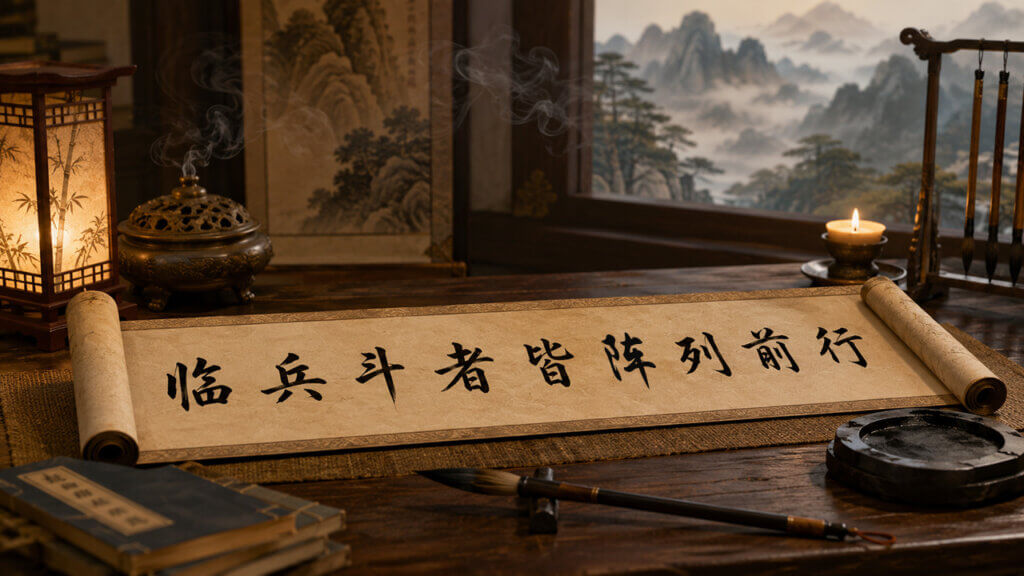
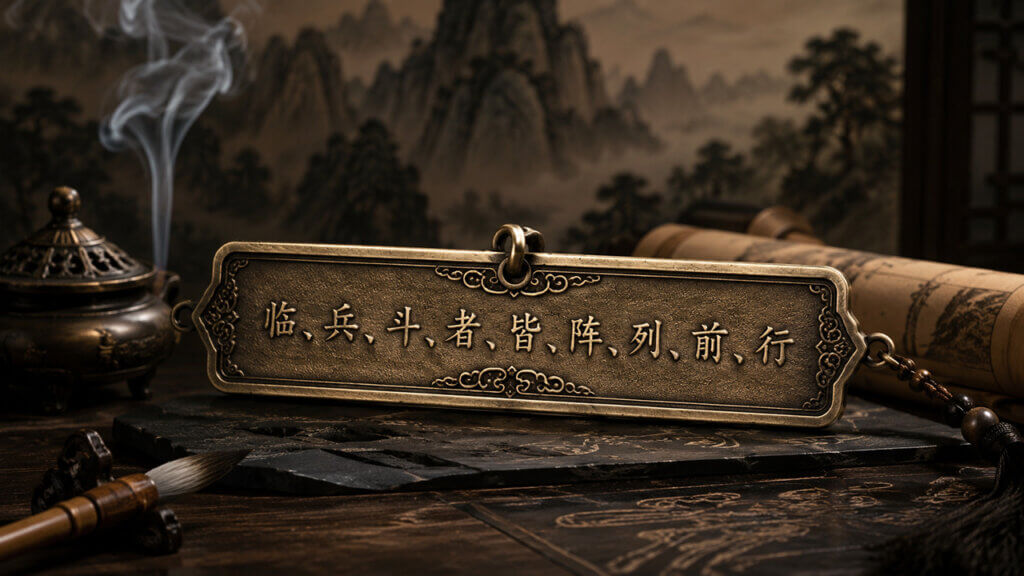
Nine Mantra meaning begins with nine characters that carry a strong presence in East Asian symbolic culture: Lin, Bing, Dou, Zhe, Jie, Zhen, Lie, Qian, Xing.
In Chinese, the phrase is commonly written as 临、兵、斗、者、皆、阵、列、前、行.
The Nine Mantra appears across Taoist cultural language, ritual traditions, Japanese Kuji-in systems, martial culture, calligraphy, pendants, bracelets, charms, and ritual-inspired objects. Its lasting appeal comes from the way these nine words hold presence, discipline, order, alignment, and forward movement in a compact symbolic form.
At Daoism Light, the Nine Mantra is approached as a cultural and symbolic phrase, not a guaranteed spiritual tool. It belongs to a wider world of Eastern symbols where traditional language, visual form, embodied practice, and personal reflection meet.
If you are new to Taoist thought, you may also start with our simple guide to Daoism to understand the broader cultural background behind many Daoist-inspired symbols.
Key Takeaways: Nine Mantra Meaning at a Glance
The Nine Mantra meaning centers on nine characters. Together, they form a symbolic path from inner steadiness to purposeful movement.
Character
Pinyin
Core Meaning
Symbolic Reading
临
Lín
Presence
Becoming steady before action
兵
Bīng
Discipline
Gathering strength with direction
斗
Dòu
Challenge
Facing pressure without losing center
者
Zhě
The actor
Returning to the person who must choose
皆
Jiē
Unity
Bringing scattered attention together
阵
Zhèn
Formation
Creating inner order and structure
列
Liè
Sequence
Aligning things in the right place
前
Qián
Forward
Moving with direction
行
Xíng
Practice
Turning clarity into lived action
The Historical Origin: Baopuzi and Ge Hong
The early textual background of the Nine Mantra is often connected with Baopuzi抱朴子, a major work associated with Ge Hong葛洪, a Jin dynasty scholar, writer, and Taoist alchemical thinker.
In this older context, the phrase was connected with mountain travel, ritual awareness, and the practitioner’s need to remain steady in uncertain environments. Mountains in early Chinese religious imagination were not merely scenic places. They were spaces of retreat, cultivation, danger, mystery, and contact with forces beyond ordinary daily life.
The Nine Mantra belonged to a traditional world where words, breath, body, direction, gesture, and intention were closely linked. Its meaning is best approached through cultural symbolism, ritual focus, and personal reflection rather than guaranteed outcomes.
Mountains, Practice, and the Meaning of Steadiness
In early Chinese thought, mountains were more than natural landscapes. They were places of retreat, testing, cultivation, and contact with the unknown. A person entering the mountains was not only moving through physical space, but also stepping away from ordinary social order into a more uncertain symbolic world.
This makes the Nine Mantra especially meaningful. Its sequence does not simply point to force or control. It reflects the need to gather oneself before entering a place of difficulty. Presence, order, breath, gesture, and intention become part of the same movement.
Seen in this way, the Nine Mantra carries a quiet practical wisdom. It reminds the practitioner to become steady before facing what is unfamiliar.
Taoist Nine Words Mantra vs Japanese Kuji-in
The Chinese Nine Mantra and Japanese Kuji-in are related, but they are not exactly the same.
The Taoist side
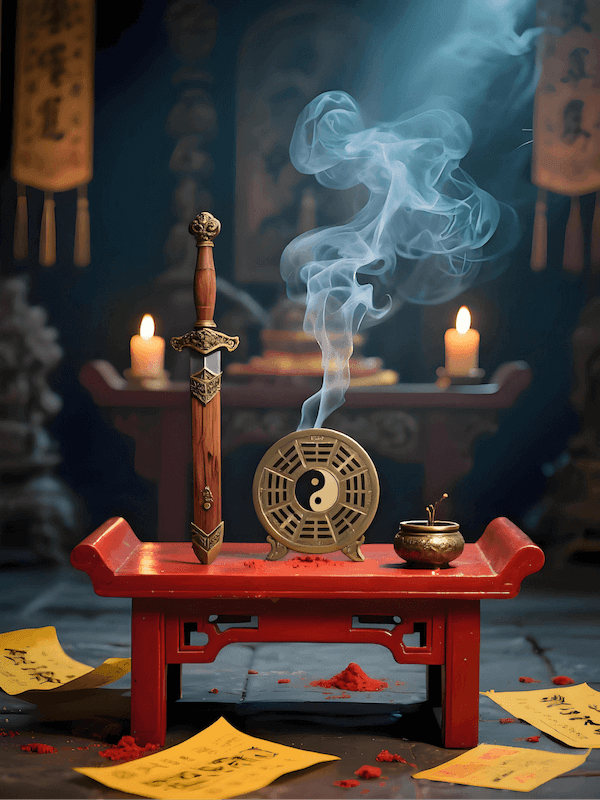
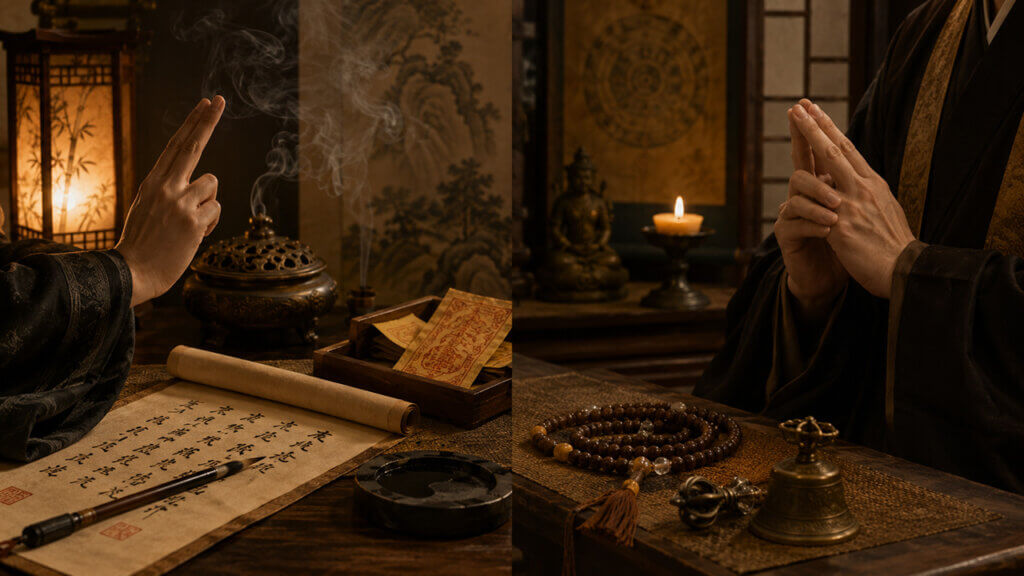
In the Chinese cultural context, the Nine Mantra is often connected with Taoist ritual language, mountain practice, symbolic order, talismans, visualization, breath, finger methods, hand gestures, and the alignment of body, direction, and intention before entering an uncertain situation.
Chinese Taoist traditions may include ritual gestures, finger methods, written talismans, visualization, and breath-based practice. These forms are not always presented as a fixed set of nine hand seals, but they show that the Chinese context is not limited to text alone.
The Japanese Kuji-in side
In Japanese esoteric systems, Kuji-in developed into a more elaborate structure involving hand seals, syllables, visualization, and ritualized body-mind practice. In modern popular culture, it is sometimes simplified into “ninja hand signs,” but that is only one surface-level association.
In Japanese esoteric traditions, specific physical hand seals, often called mudras, became closely associated with each character. These gestures created a strong visual identity for Kuji-in and later became familiar through martial arts, films, anime, and popular culture.
The cultural connection
The Nine Mantra traveled across cultures and gained new layers of meaning over time. The Taoist Nine Words Mantra emphasizes symbolic order, ritual language, gesture, breath, and inner steadiness. Kuji-in emphasizes embodied practice, hand seals, syllables, and esoteric adaptation.
They share historical connection, while each tradition keeps its own cultural context.
The Nine Mantra is often mixed with Japanese ninja imagery because Kuji-in and Kuji-kiri became widely known through martial arts, films, anime, and popular culture. These modern images are visually powerful, but they do not represent the full history of the nine-character formula.
The Chinese Taoist context is more varied than it may appear from outside. It may include ritual language, mountain practice, body-breath awareness, hand methods, written talismans, and the ordering of intention before action. Japanese Kuji-in developed its own more visible embodied system through hand seals and esoteric practice.
Both traditions are meaningful, but they should not be flattened into the same thing. Understanding the difference allows the Nine Mantra to be appreciated with more depth and respect.
Decoding the Taoist Nine Words Mantra: Character Meanings
1、Lin (临) — Achieving Presence Before Action
Symbolic Meaning of Lin in Nine Mantra
The first character of the Nine-Character Mantra is Lin (临), which means to arrive, face, or stand before something. Symbolically, it represents presence.
Before any action, there must be awareness. Lin reminds us not to react blindly. It asks us to become fully present before meeting a challenge.
2、Bing (兵) — Cultivating Discipline and Directed Strength
Symbolic Meaning of Bing in Nine Mantra
The second character of the Nine-Character Mantra is Bing (兵), which means soldier, weapon, or organized force. In symbolic reading, it points to discipline.
Strength without discipline can become scattered. Bing represents the ability to gather energy and direct it with purpose.
3、Dou (斗) — Facing Challenge Without Losing Center
Symbolic Meaning of Dou in Nine Mantra
The third character of the Nine-Character Mantra is Dou (斗), which means struggle, contest, or confrontation. It carries the courage to face pressure directly.
The deeper meaning is not aggression. It is the ability to remain centered while meeting difficulty.
4、Zhe (者) — Returning to the Acting Person
Symbolic Meaning of Zhe in Nine Mantra
The fourth character of the Nine-Character Mantra is Zhe (者), which refers to “the one who” or “the person involved.” It brings the mantra back to the individual.
The Nine Mantra is not only about outer forces. It asks: Who is standing here? Who must choose? Who must act with awareness?
5、Jie (皆) — Gathering What Has Become Scattered
Symbolic Meaning of Jie in Nine Mantra
The fifth character of the Nine-Character Mantra is Jie (皆), which means all, together, or complete. Symbolically, it suggests unity.
When attention is scattered, action becomes weak. Jie gathers what has been divided by stress, distraction, or hesitation.
6、Zhen (阵) — Forming Inner Order and Structure
Symbolic Meaning of Zhen in Nine Mantra
The sixth character of the Nine-Character Mantra is Zhen (阵), which means formation, arrangement, or structured order.
In life, courage alone is not enough. We also need structure. Zhen represents the formation of inner order before outward movement.
7、Lie (列) — Aligning Things in Proper Sequence
Symbolic Meaning of Lie in Nine Mantra
The seventh character of the Nine-Character Mantra is Lie (列), which means to arrange, line up, or place in order.
Not everything should happen at once. Lie carries the value of timing, placement, and alignment.
8、Qian (前) — Moving Forward With Direction
Symbolic Meaning of Qian in Nine Mantra
The eighth character of the Nine-Character Mantra is Qian (前), which means forward or ahead.
After presence, strength, challenge, unity, formation, and alignment, direction becomes possible. Qian is not rushed movement. It is movement with orientation.
9、Xing (行) — Turning Clarity Into Lived Action
Symbolic Meaning of Xing in Nine Mantra
The ninth character of the Nine-Character Mantra is Xing (行), which means movement, practice, conduct, or action.
The Nine Mantra does not end in thought. It ends in movement. Its final message is that clarity must eventually become lived action.
The Deeper Structure: From Inner Order to Forward Action
The Nine Mantra is not just a list of words. It has a movement.
It begins with presence, gathers strength, faces challenge, returns to the acting person, forms order, creates alignment, points forward, and ends in practice.
Even outside formal ritual practice, the symbolic sequence can still be read as a map of human action.
Before we move, we must become present. Before we act, we must gather ourselves. Before we go forward, we must find direction.
In Chinese traditional culture, the number nine often suggests fullness, height, completion, and a sense of reaching the upper limit of a cycle.
Nine appears frequently in ideas connected with heaven, ritual order, imperial symbolism, and cosmic structure. In the Nine Mantra, the number gives the phrase a complete rhythm.
The nine characters do not feel random. They feel like a full sequence: from standing before a situation to moving through it.
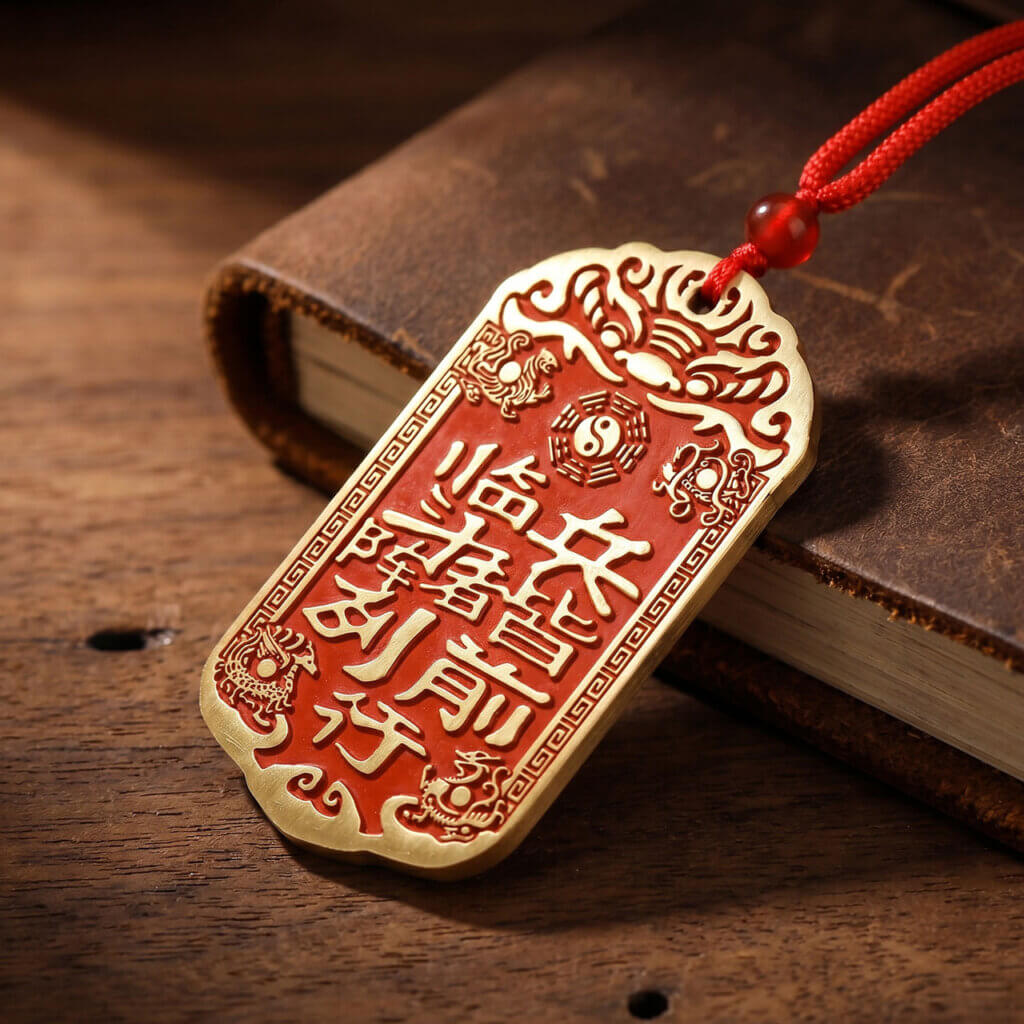
When engraved on a pendant or charm, the nine characters create both visual balance and symbolic progression.
The Bagua offers another way to understand order, direction, and symbolic structure. You can continue with our Bagua guide for a broader view of Taoist-inspired visual systems.
How to Understand the Nine Mantra in Modern Life
The Nine Mantra does not need fear, fantasy, or exaggerated claims. Its value can be grounded in daily life.
It can remind the wearer to pause before reacting, organize scattered attention, and move with clearer intention. For someone starting a project, entering a new stage, or choosing an object with cultural depth, the Nine Mantra can feel personal and grounded.
Worn close to the body or carried through daily routines, it becomes a quiet point of return.
Looking for a daily reminder of inner order? Explore our curated collection of Nine Mantra Pendants & Charms designed to bring Eastern symbolism into modern daily life.
Common Misunderstandings About the Nine Mantra
Misunderstanding 1: It is only a ninja symbol
The Nine Mantra appears in Japanese martial and popular culture, but its background is broader. It has deeper connections with East Asian ritual language and Taoist-influenced symbolic systems.
Misunderstanding 2: It guarantees a specific result
The Nine Mantra is better understood as a symbolic reminder of focus, order, courage, and forward movement, not as a promise of guaranteed results.
Misunderstanding 3: All versions are identical
Different traditions may use different characters, pronunciations, hand seals, finger methods, and explanations. A pendant or charm may preserve the symbolic phrase, but it does not represent every ritual tradition in full.
Misunderstanding 4: It must be practiced ritually to have meaning
Ritual practice belongs to specific traditions and should be respected. The Nine Mantra can also be appreciated as cultural symbolism, visual design, and a personal reminder.
Final Thoughts
The Nine Mantra meaning is not limited to mystery, martial culture, or ritual practice. At its deepest level, it expresses a human process: become present, gather strength, face challenge, form order, align yourself, and move forward.
The Nine Mantra carries traditional depth while remaining close to modern daily life. As a pendant, bracelet, key charm, or hanging object, it becomes more than decoration. It becomes a small cultural reminder of intentional movement through life.
Continue exploring Taoist-inspired symbols, pendants, and charms that bring traditional meaning into modern life.
FAQ
What is the Nine Mantra meaning?
The Nine Mantra meaning is commonly understood as a symbolic sequence about presence, discipline, challenge, unity, order, alignment, and forward action.
What are the nine characters of the Nine Mantra?
The most common Chinese Taoist form is: Lin, Bing, Dou, Zhe, Jie, Zhen, Lie, Qian, Xing — 临、兵、斗、者、皆、阵、列、前、行. Note: In Japanese Kuji-in traditions, these characters are often pronounced as: Rin, Pyo, Toh, Sha, Kai, Jin, Retsu, Zai, Zen.
Is the Nine Mantra Taoist?
The Nine Mantra is often connected with Taoist cultural and ritual traditions, especially through references associated with Baopuzi and early Chinese symbolic practice. It also influenced later Japanese Kuji-in traditions.
Is the Nine Mantra the same as Kuji-in?
They are related but not identical. The Taoist Nine Words Mantra is rooted in Chinese cultural context, while Japanese Kuji-in developed a more systematized use of hand seals, visualizations, and esoteric interpretations.
Did Chinese Taoist traditions also use hand gestures with the Nine Mantra?
Yes. Chinese Taoist-related traditions may include finger methods, ritual gestures, talismans, visualization, breath, and written forms. These are not always shown as one fixed set of nine hand seals, but they are part of the broader ritual and symbolic context.
Can I wear a Nine Mantra pendant every day?
Yes. A Nine Mantra pendant can be worn as a cultural accessory and personal reminder. It is best understood as symbolic jewelry rather than a guaranteed spiritual tool.
Is a Nine Mantra charm a good gift?
Yes. It can be a meaningful gift for someone who appreciates Taoist-inspired symbols, Eastern culture, martial traditions, personal discipline, or thoughtful daily objects.
Do I need to know the hand seals to appreciate the Nine Mantra?
No. Hand seals and finger methods belong to specific traditions and should be respected, but a modern reader can still appreciate the Nine Mantra as a cultural symbol and reflective object.
Author Note
Written by the Daoism Light editorial team, this article is created for readers who want to understand Taoist-inspired symbols in a clear, respectful, and modern way.
At Daoism Light, we approach traditional symbols through cultural meaning, historical context, visual design, and personal reflection. We do not present symbolic objects as guaranteed results or supernatural shortcuts. Instead, we see them as meaningful accents that bring intention, balance, and quiet beauty into everyday life
We use cookies to enhance your browsing experience, serve personalised content, and analyse our traffic. By clicking "Accept", you consent to our use of cookies.