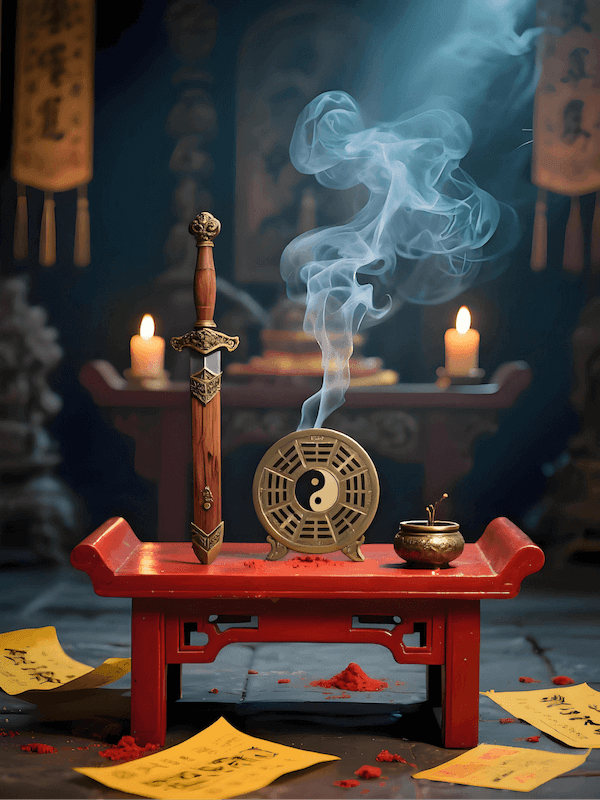
Feng Shui
Daoist Feng Shui: Why Feng Shui Without Daoism Often Fails
Daoist Feng Shui reveals why object-only Feng Shui often fails when it ignores Daoist balance, Qi, Yin-Yang, intention, and daily living.
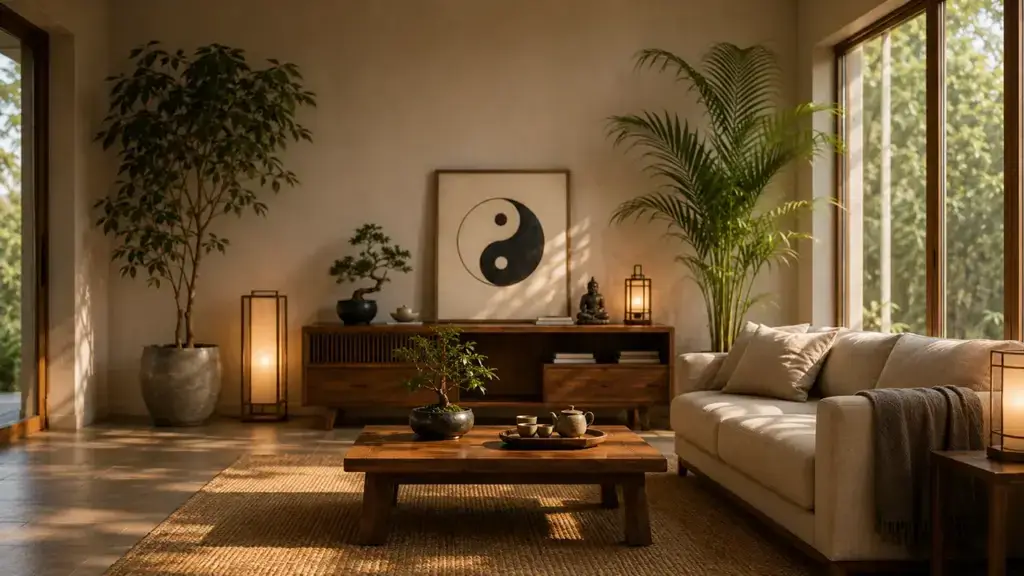
How Daoist Principles Bring Feng Shui Back to Balance
Daoist Feng Shui is not about buying a lucky object and waiting for life to change.
Maybe you placed a money frog near the door.
Maybe you hung a Bagua mirror because a magazine or social media post told you to.
Maybe you bought a charm, moved a mirror, added a plant, or placed coins in a certain corner.
And yet, months later, your home still feels heavy. Your desk still feels distracting. Your sleep still feels restless. The space looks different, but your daily rhythm has not truly changed.
So you may ask:
Why did my Feng Shui fail?
The honest answer is this: what many people practice today is often not Feng Shui in its deeper sense. It is decoration with an East Asian surface.
When Feng Shui is separated from Daoist thinking, it loses its foundation. It becomes a checklist. It becomes object shopping. It becomes fear-based decoration. It becomes a quick fix without inner structure.
Real Daoist Feng Shui begins with a more useful question:
Does this space help you live with more balance, clarity, rhythm, and natural alignment?
That question changes everything.
Key Takeaways
- Feng Shui often fails when it becomes object-based instead of principle-based.
- Daoist Feng Shui focuses on balance, Qi, Yin-Yang, restraint, timing, and human behavior.
- Objects are not magic. They are symbolic tools that can support awareness and intention.
- A home is not separate from the people living in it.
- The most useful approach is simple, grounded, culturally respectful, and practical.
- Daoist-inspired decor works best as a visual anchor for balance, not as a supernatural guarantee.
The Missing Link: Feng Shui Without Daoism Becomes a Shortcut
Feng Shui is often presented as a fast solution.
Put this in the wealth corner.
Never place that near the bed.
Hang this mirror.
Buy this charm.
Add this color.
Avoid this direction.
Some of these ideas may come from older traditions, but when they are copied without context, they lose depth.
This is what we can call shortcut Feng Shui.
It treats the home like a machine: press the right button, get the right result.
Daoist Feng Shui does not work that way.
A home is not a machine. It is a living field of movement, rest, light, shadow, memory, habit, emotion, material, and meaning.
When that relationship is ignored, even beautiful objects can feel empty.
What Is Daoist Feng Shui?
Daoist Feng Shui is a way of understanding space through Daoist ideas such as natural harmony, Yin and Yang, the Five Elements, Qi, simplicity, restraint, and alignment with the environment.
It does not treat Feng Shui as decoration only.
It asks how the space affects the person, and how the person affects the space.
Your entryway influences how you enter your day.
Your desk influences how you focus.
Your bedroom influences how you rest.
Your clutter influences how you breathe.
Your symbolic objects influence what you remember and return to.
In this sense, Daoist Feng Shui is not only about placement.
It is about relationship.
The Daoist Trinity: Heaven, Earth, and Humanity
A helpful way to understand traditional Chinese spatial thinking is through the relationship of Heaven, Earth, and Humanity.
| Daoist Layer | What It Means | How It Appears in a Home |
|---|---|---|
| Heaven | Time, season, rhythm, cycles | A room may need different light, softness, or structure during different seasons or life stages. |
| Earth | Layout, architecture, material, surroundings | Hallways, entrances, furniture placement, light, air, and pathways shape how a space feels. |
| Humanity | Habit, intention, daily action | Sleep patterns, work habits, emotional state, and personal discipline affect how the home functions. |
Heaven: Time, Season, and Larger Rhythm
“Heaven” refers to timing, seasons, cycles, and the larger rhythm of life.
A space does not feel the same in every season.
A home does not support the same needs during every life stage.
A work area may need more clarity during a busy period and more softness during recovery.
Daoist Feng Shui pays attention to timing rather than forcing one fixed solution forever.
Earth: Landscape, Home, Layout, and Material
“Earth” refers to the physical environment.
This includes architecture, direction, light, air, room layout, pathways, furniture, materials, and surrounding landscape.
A narrow hallway, a dark corner, a cluttered entrance, or a crowded desk may affect how a person feels and behaves every day.
Humanity: Habit, Intention, and Daily Action
“Humanity” refers to the people living in the space.
A beautiful room cannot replace poor sleep habits.
A meaningful charm cannot replace real effort.
A symbolic object cannot repair a life that is lived without awareness.
Daoist Feng Shui works best when space, object, and human action support each other.
Why This Matters
This is one reason object-only Feng Shui often fails.
It focuses on Earth only — the object and the room — while ignoring Heaven and Humanity: timing, personal rhythm, intention, and daily behavior.
Qi: Not Just “Energy,” But Living Relationship
Qi is often translated as “energy,” but that word can feel vague in English.
In Daoist thinking, Qi is better understood as the living movement of vitality, breath, pattern, and presence.
In a home, Qi can be felt through:
- how easily you move through a space
- whether light feels soft or harsh
- whether a room feels open or blocked
- whether objects feel meaningful or random
- whether the home supports rest, focus, and calm
Qi is not just air entering through a window.
It is the total feeling of how space moves around you and how you respond to it.
This is why simply placing an object somewhere may not change much. If the room is cluttered, the habits are chaotic, and the object is chosen from fear, the deeper relationship has not changed.
Why Feng Shui Without Daoism Often Fails
1、It Turns Living Wisdom Into Object Placement
Many people approach Feng Shui as if one object can fix an entire life.
A coin near the door.
A mirror in the hallway.
A charm on the wall.
A plant in a certain corner.
The problem is not the object itself. The problem is the belief that the object works independently from the person, the space, and the way the home is actually used.
In Daoist thinking, no single object exists in isolation. Everything belongs to a relationship: light and shadow, movement and stillness, inside and outside, personal habit and physical environment.
A Bagua symbol, a Five Emperor Coin design, a Taiji motif, or a scholar ornament may carry cultural and symbolic meaning. But its deeper value appears when it becomes part of a thoughtful space, not when it is treated as a shortcut.
Better Daoist-Inspired Approach
Instead of asking:
“Where should I put this to get luck?”
Ask:
“Where will this object remind me to act with steadiness, clarity, and intention?”
That is a more honest and more useful question.
2、It Treats Symptoms, Not the Root Relationship
Shortcut Feng Shui may see a dark room and say:
“Add a mirror.”
“Paint it brighter.”
“Put a plant there.”
These suggestions may help visually, but they do not always address the deeper relationship.
Why does the room feel stagnant?
Is it too full?
Is the light too harsh or too weak?
Is the room being used against its natural function?
Does the person living there avoid this space because it carries stress?
Daoist Feng Shui looks beyond surface correction.
It asks what the space is doing to the person, and what the person keeps repeating in the space.
Practical Example
A desk may feel “bad” not because it lacks a special object, but because it faces constant distraction, holds too much clutter, and has no clear boundary between work and rest.
In this case, the real solution may be:
- clear the surface
- reduce visual noise
- improve lighting
- choose one meaningful symbol
- create a simple daily starting ritual
The object supports the change. It does not replace the change.
3、It Focuses on Fear Instead of Balance
Feng Shui fails when it is driven by fear.
Fear of the wrong direction.
Fear of bad energy.
Fear of missing a cure.
Fear that one object in the wrong place will ruin the home.
This approach creates anxiety instead of harmony.
Daoist thought is not built on panic. It is built on observing patterns, reducing excess, returning to simplicity, and living closer to natural rhythm.
A home should not feel like a battlefield of invisible threats. It should feel like a place where the body can settle and the mind can become clearer.
What This Means for Home Decor
Daoist-inspired home decor should not make people feel afraid.
It should create a quiet sense of order, meaning, and presence.
A symbol near the entryway may mark the transition from outside noise to inner calm.
A small object on a desk may help define a place of focus.
A Taiji design may bring visual balance into a room without overwhelming it.
These are realistic, grounded benefits.
4、It Ignores Yin and Yang
One of the biggest reasons Feng Shui without Daoism fails is that it ignores Yin and Yang.
Yin and Yang are not just black and white shapes. They describe a living balance between complementary forces:
- stillness and movement
- softness and structure
- darkness and light
- rest and action
- openness and containment
A room can fail when it has too much Yang: too bright, too loud, too crowded, too stimulating.
A room can also fail when it has too much Yin: too dark, too heavy, too stagnant, too closed.
Daoist Feng Shui does not ask every home to look the same. It asks whether the feeling of the space matches the function of the space.
Practical Example
A bedroom should lean more Yin: quiet, soft, restful, and uncluttered.
A study or office can hold more Yang: clear light, upright posture, structured tools, and symbols of focus.
An entryway needs balance: open enough to welcome movement, grounded enough to feel stable.
This is why copying a generic Feng Shui rule often does not work. The same object can feel right in one home and wrong in another because the surrounding relationship is different.
5、It Uses Symbols Without Understanding Their Meaning
Daoist symbols are often used in modern decor, jewelry, and charms. But when their meaning is ignored, they become empty decoration.
A Bagua is not just a pattern.
Taiji is not just a circle.
The Five Elements are not just five materials.
Five Emperor Coins are not just antique-style coins.
Pixiu is not just a mythical animal.
Each symbol carries layers of cultural memory, cosmology, and human intention.
When used with understanding, these symbols can become meaningful anchors in modern life. When used casually or fearfully, they lose depth.
Readers who want to understand these symbols more clearly can explore our Daoist Symbol Collections, where traditional forms are presented through cultural meaning, design, and everyday use.
How to Use Daoist Symbols More Respectfully
Use them with three simple principles:
- Know the basic meaning.
- Place them with visual restraint.
- Let them support reflection rather than superstition.
6、It Separates Space From Daily Behavior
A clean desk does not create focus if your habits are chaotic.
A calm bedroom does not improve rest if your phone dominates the night.
A meaningful wall hanging does not create harmony if the home is full of unresolved tension.
This is where Daoist Feng Shui becomes more practical than object-only Feng Shui.
Daoist thinking values small, repeated adjustments. A space becomes supportive not because it is perfect, but because it helps you return to better patterns.
The Real Function of Daoist-Inspired Objects
A Daoist-inspired object should help you remember something simple:
To slow down.
To enter with respect.
To work with steadiness.
To rest without guilt.
To choose balance over excess.
This is where symbolic decor becomes genuinely useful.
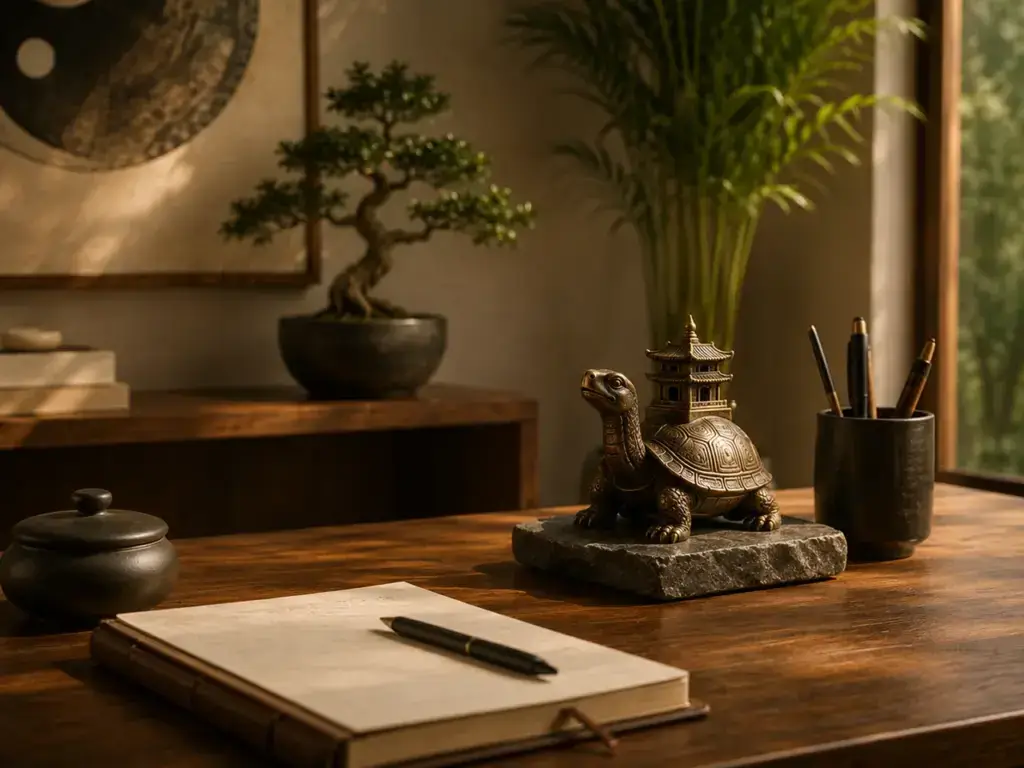
Feng Shui as a System, Not a Shortcut
Feng Shui is often marketed as a quick fix. But Daoist Feng Shui is better understood as a system of relationship.
It includes:
- the visible layout of a space
- the rhythm of daily life
- the symbolic meaning of objects
- the emotional feeling of a room
- the natural movement of light, air, sound, and attention
When people expect Feng Shui to work like a switch, they become disappointed.
When they approach it as a practice of alignment, it becomes more meaningful.
This is the difference between buying a “cure” and creating a space that quietly supports the life you are trying to build.
What Daoism Adds to Feng Shui
| Daoist Principle | What It Adds to Feng Shui | Practical Meaning |
|---|---|---|
| Natural Flow | Movement without force | Keep pathways open and avoid visual blockage. |
| Simplicity | Less noise, more clarity | Use fewer objects with stronger meaning. |
| Balance | Right relationship between opposites | Match the mood of each room to its function. |
| Timing | Awareness of change | Adjust a space as seasons, habits, and life stages shift. |
| Intention | Meaningful use of objects | Choose symbols that support daily awareness. |
Natural Flow
Daoism values movement that feels natural rather than forced. In home design, this means the space should be easy to move through, visually breathable, and not overloaded with symbolic objects.
Simplicity
Daoist aesthetics often favor restraint. A single meaningful object can be stronger than a crowded shelf of charms.
Balance
Balance does not mean symmetry everywhere. It means the right relationship between calm and activity, emptiness and fullness, function and beauty.
Timing
A space changes with seasons, life stages, work habits, and emotional needs. Daoist Feng Shui is not fixed forever. It adapts.
Intention
Objects matter most when they are connected to awareness. Without intention, even a meaningful symbol becomes passive.
How to Apply Daoist Feng Shui at Home
| Area | Daoist Feng Shui Focus | Best Use of Symbolic Decor |
|---|---|---|
| Entryway | Transition, grounding, first impression | Use one small hanging charm or symbolic accent to create a calm threshold. |
| Desk or Study | Focus, clarity, steady effort | Choose one scholar success ornament or meaningful desk piece. |
| Bedroom | Rest, softness, recovery | Keep decor minimal, gentle, and visually quiet. |
| Living Room | Balance, gathering, shared rhythm | Use symbols sparingly so the room remains open and comfortable. |
| Shelf or Niche | Meaning, memory, visual anchor | Place one or two objects with clear cultural meaning. |
Start With the Entryway
The entryway shapes the transition between outside life and inner space.
Keep it clear, grounded, and visually calm. A small Daoist-inspired hanging charm can work well here if it feels integrated rather than excessive.
The goal is not to overload the door with symbols. The goal is to create a calm threshold — a place where the home begins to feel settled.
Best Intention
Use the entryway as a reminder to leave noise behind and enter with presence.
For readers who want to create this kind of quiet threshold, our Daoist hanging charms are designed as symbolic accents for entryways, doors, bags, cars, and daily spaces.
Create a Focus Point for the Desk
For workspaces, avoid cluttered symbolism.
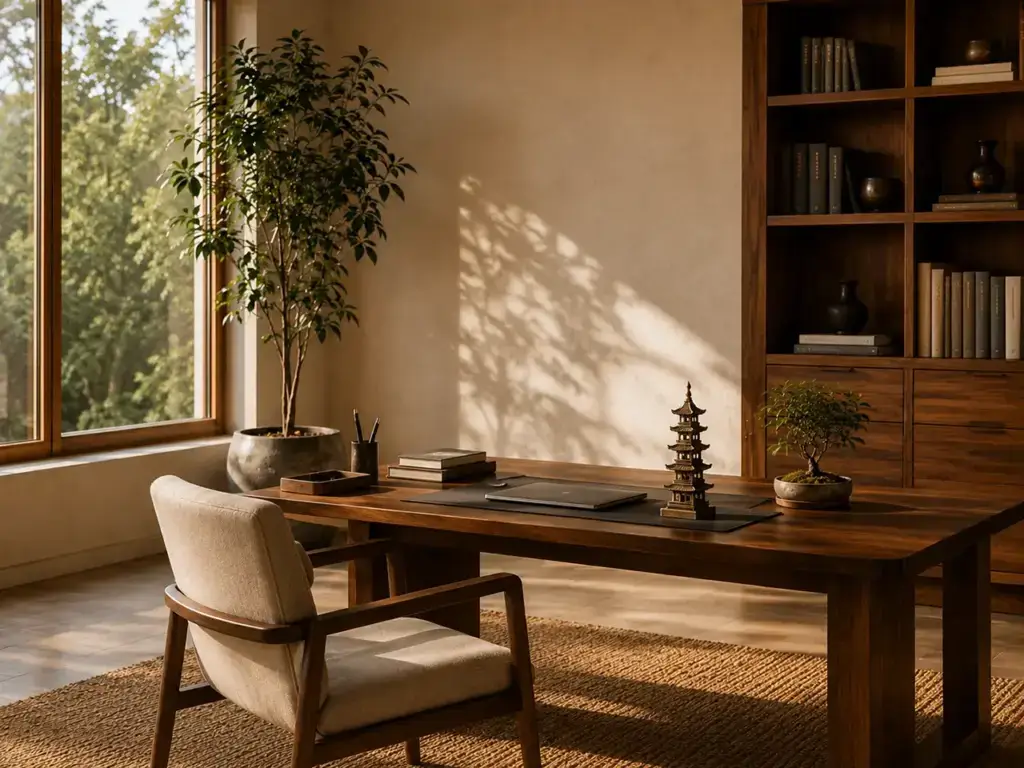
One small object with strong meaning is enough. A scholar success ornament can act as a quiet visual anchor without turning the desk into a display shelf.
The most effective desk object is not the loudest one. It is the one that helps the space feel more focused, intentional, and clear.
H4: Best Intention
Use the desk symbol to support clear attention and steady effort.
For study rooms, home offices, and creative workspaces, explore our Daoist-inspired desk decor for pieces that bring traditional symbolism into modern daily work.
Keep the Bedroom Soft and Uncrowded
The bedroom should support rest. Heavy symbols, sharp objects, or visually intense decor can feel overstimulating.
Choose softer textures, fewer objects, and a calm visual rhythm.
A bedroom does not need many symbolic items. In many cases, less is more.
Best Intention
Let the bedroom support recovery, not performance.
Use Symbols Where They Can Be Seen Naturally
A symbol works best when it belongs to the space.
Do not hide it in a place where it has no relationship to your daily life. Do not force it into a corner just because a generic rule says so.
A meaningful object should feel visually natural, culturally respectful, and emotionally calm.
Best Intention
Place meaningful objects where they can gently remind you of the qualities you want to cultivate.
If you are not sure which symbol fits your space, our Symbol Collections can help you compare Daoist-inspired motifs such as Yin-Yang, Bagua, Five Elements, Five Emperor Coins, and Pixiu.
How Daoism Light Approaches Daoist Feng Shui Decor
At Daoism Light, we approach Daoist-inspired objects as cultural, aesthetic, and contemplative pieces.
We do not present them as magical guarantees.
Instead, we see them as meaningful accents that help bring traditional symbolism into modern life with clarity and respect.
A hanging charm near the entrance can become a daily reminder of steadiness.
A Taiji or Bagua-inspired piece can bring visual balance to a space.
A Five Emperor Coin design can carry historical and symbolic depth.
A scholar success ornament can reflect discipline, learning, and perseverance.
The value is not in fear-based promises.
The value is in meaning, material, design, and the quiet relationship between object and space.
A Better Way to Choose Daoist-Inspired Objects
Choose meaning before quantity.
Choose quality materials over mass-produced novelty.
Choose placement with care.
Choose cultural respect.
Choose a symbol you can live with every day.
A good Daoist-inspired object should not shout.
It should quietly remind.
Final Thought: Feng Shui Works Best When It Becomes a Way of Seeing
Feng Shui without Daoism often fails because it becomes too external.
It asks:
What object should I buy?
Daoist Feng Shui asks:
What relationship am I creating between myself, my space, my habits, and the natural flow of life?
That second question is deeper. It is also more useful.
A meaningful object can support that relationship.
A balanced room can support that relationship.
A clear entryway, a calm desk, and a quiet bedroom can support that relationship.
But the real transformation begins when space is no longer treated as a superstition machine.
It begins when space becomes a teacher of balance.
FAQ
Why does Feng Shui fail for many people?
Feng Shui often fails when it is reduced to buying objects, copying rules without context, or acting from fear. A more grounded Daoist Feng Shui approach looks at balance, Qi, function, light, clutter, symbolic meaning, and daily behavior.
Is Feng Shui originally Daoist?
Feng Shui is connected with Chinese cosmology, Yin and Yang, Five Elements theory, landscape observation, and traditional ways of understanding harmony between humans and environment. Daoism strongly influenced many of these ideas, although Feng Shui also developed through broader Chinese cultural and regional traditions.
What is the difference between Feng Shui and Daoist Feng Shui?
General Feng Shui may focus on placement, direction, and spatial arrangement. Daoist Feng Shui places stronger emphasis on natural flow, Yin-Yang balance, simplicity, timing, restraint, and the relationship between person and environment.
Do Daoist symbols guarantee good luck?
No. Daoist-inspired symbols should not be presented as guarantees. They are better understood as cultural and symbolic objects that can support intention, reflection, and visual balance.
Do I need to be Daoist to use Daoist Feng Shui ideas?
No. You do not need to become Daoist to appreciate Daoist-inspired spatial wisdom. What matters is using the ideas respectfully: balance, simplicity, restraint, natural flow, and awareness.
Can I still use mirrors, crystals, coins, or charms?
Yes, but they should not be used blindly. Their placement should make visual, practical, and symbolic sense within the space. In Daoist Feng Shui, an object works best when it supports the larger relationship between room, person, and intention.
Where should I place Daoist-inspired decor?
Good places include entryways, studies, living rooms, shelves, or calm transition areas. The best placement depends on visibility, purpose, and whether the object feels naturally connected to the space.
Is it bad to use Feng Shui decor only for aesthetics?
Not necessarily. Aesthetic appreciation is valid, but it is better to understand the basic meaning of important symbols. This creates a more respectful and meaningful relationship with the object.
Author Note
Written by the Daoism Light editorial team, this article is created for readers who want to explore Daoist symbols in a clear, modern, and culturally respectful way.
Here, we approach Daoist-inspired objects through their symbolic depth, historical background, and thoughtful place in everyday life. We do not present these pieces as magical guarantees or exaggerated spiritual shortcuts. Instead, we see them as cultural, aesthetic, and contemplative anchors — meaningful accents that bring a sense of intention, balance, and quiet beauty into modern spaces.