Five Elements
Fire Element Meaning in Wu Xing: Daoist Guide to Warmth & Balance
Discover the true Fire Element Meaning in Wu Xing. Learn Daoist fire symbolism, Yin and Yang Fire, personality traits, and balanced home decor ideas.
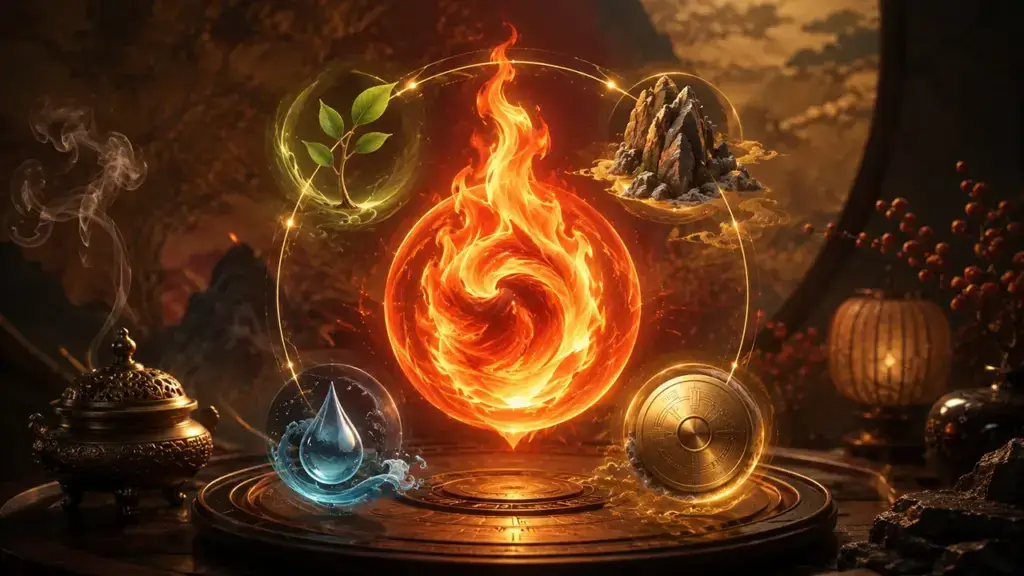
Fire Element Meaning in Wu Xing: A Daoist Guide to Warmth, Visibility, and Inner Balance
Introduction: More Than Just a Flame
In our work with Daoist-inspired spaces and symbolic objects, we often hear a similar question from designers, founders, and home-office workers: “Why does my workspace have the best technology, clean furniture, and expensive equipment, but still feel cold, flat, and uninspiring?”
From a Wu Xing perspective, this is often a sign that the room lacks a warm Fire presence — not in a mystical sense, but as a visual and sensory quality. Fire is the phase of warmth, visibility, expression, emotional presence, and transformation.
When searching for the true Fire Element Meaning in Wu Xing, modern seekers are often looking beyond the physical flame. They may be trying to understand why creative energy rises and disappears in sudden waves, why a minimalist room can feel emotionally sterile, or why constant performance can slowly turn into burnout.
In Daoist and traditional Chinese philosophy, Fire is not simply heat or red color. It is a dynamic phase of movement — one that helps hidden potential become visible life.
While Western atomism often views an “element” as a static building block of matter, Daoist wisdom sees Wu Xing as a dance of five continuous phases. Fire is not a permanent “thing.” It is the apex of Yang expression: the precise moment when inner energy begins to shine outward.
Fire is the glow of a candle on a writing desk.
It is the courage to speak clearly.
It is the warmth that makes a room feel human.
It is also the warning that too much intensity can become exhaustion.
This is why Fire symbolism still matters today. In a culture that often rewards speed, output, and being “always on,” the Fire Element asks a quieter question: How do we keep our inner light alive without letting it burn us out?
Quick Answer: What Does the Fire Element Mean in Wu Xing?
In Wu Xing, the Fire Element symbolizes warmth, light, visibility, expression, transformation, joy, and outward movement. It is traditionally associated with summer, the South, red tones, brightness, and the peak of Yang expression.
A healthy Fire presence feels warm, clear, alive, and expressive. Too little Fire may feel dull, cold, or uninspired. Too much Fire may feel restless, overstimulating, or visually overwhelming.
The Core Meaning of Fire in Wu Xing Philosophy
Fire Is the Phase of Visibility
Fire makes things visible.
In nature, flame reveals what darkness hides. In symbolic language, Fire represents the moment when something internal becomes external: a thought becomes a sentence, a feeling becomes expression, a private effort becomes visible work.
This does not have to mean fame or public attention. For modern readers, Fire can simply mean showing up clearly — in conversation, in creative work, in leadership, or in the way a room holds warmth.
Fire Is the Phase of Human Warmth
Fire gathers people.
Before modern lighting and heating, fire was the center of the home. People cooked around it, spoke around it, rested around it, and found safety near it.
This is why Fire symbolism often feels emotional and social. It can represent hospitality, joy, warmth, conversation, and a space that feels alive rather than sterile.
Fire Is the Phase of Transformation
Fire changes what it touches. Wood becomes ash. Raw food becomes cooked. A dark room becomes illuminated.
In Wu Xing, Fire reminds us that transformation requires energy. But it also teaches proportion. A candle brings atmosphere. A wildfire destroys. The difference is not the existence of Fire, but whether Fire is held within form.
Traditional Correspondences of the Fire Element
| Category | Fire Element Association |
|---|---|
| Wu Xing Phase | Fire / Huo / 火 |
| Season | Summer |
| Direction | South |
| Color | Red, warm red, crimson, cinnabar, bright tones |
| Movement | Rising, expanding, illuminating |
| Natural Image | Flame, sunlight, warmth, daylight |
| Symbolic Quality | Visibility, expression, transformation |
| Emotional Tone | Joy, enthusiasm, connection |
| Design Feeling | Warmth, brightness, focus, presence |
| Four Symbols Reference | Vermilion Bird / Zhuque / 朱雀 |
These correspondences should not be treated as fixed rules or guaranteed formulas. They are symbolic patterns used to understand relationships between nature, human behavior, spatial feeling, and cultural design.
Learn how the Five Phases (Wu Xing) in Daoist culture function as an interconnected system rather than five separate materials.
Yin Fire vs. Yang Fire: Two Expressions of Fire Energy
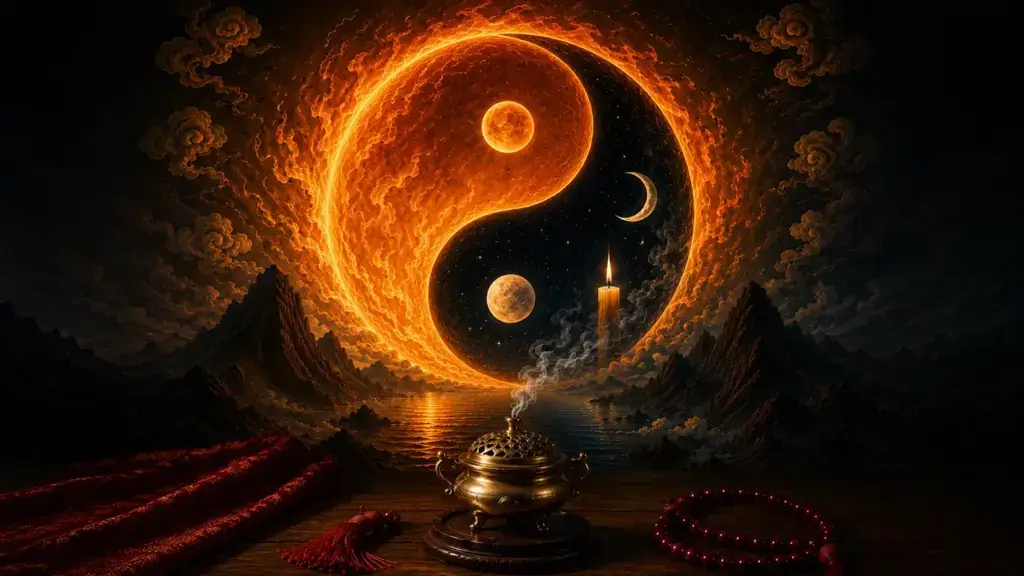
To understand Fire Element Meaning in Wu Xing more deeply, it helps to distinguish between Yang Fire and Yin Fire.
Yang Fire is like the sun: bright, public, radiant, and impossible to ignore.
Yin Fire is like candlelight or starlight: subtle, refined, intuitive, and quietly guiding.
Both are Fire, but they speak different emotional languages.
| Attribute | Yang Fire | Yin Fire |
|---|---|---|
| Symbol | Sunlight | Candle flame / starlight |
| Expression | Open, radiant, social, visible | Subtle, intuitive, refined, inward |
| Strength | Confidence, leadership, outward expression | Creativity, sensitivity, quiet guidance |
| Spatial Feeling | Bright room, public stage, energetic workspace | Reading corner, altar shelf, candlelit desk |
| Possible Excess | Impatience, overstimulation, sudden burnout | Overthinking, inner tension, emotional heaviness |
| Best Use | Public expression, creative launch, social energy | Reflection, writing, design, personal rituals |
Why This Matters in Modern Life
Many people think they need more Yang Fire: more visibility, more output, more confidence, more performance.
But not every life problem needs a brighter spotlight. Sometimes what we need is Yin Fire — a softer flame that keeps meaning alive without demanding constant exposure.
This is especially important for writers, designers, founders, teachers, and sensitive creative people. The goal is not to burn brighter at all costs. The goal is to find the right flame for the right season of life.
Wu Xing Fire Element Personality
A person with a strong Fire tendency is often expressive, warm, inspiring, emotionally vivid, and naturally drawn to connection.
This does not mean “Fire Type” should be treated as a fixed identity or personality diagnosis. In Wu Xing, personality is better understood as a symbolic tendency — a pattern that can appear strongly in certain moods, environments, seasons, or life stages.
Strengths of the Fire Type
Charisma
Balanced Fire brings presence. Some people naturally make a room feel warmer, more open, and more alive.
Expression
Fire helps inner thoughts become visible. This is valuable for creators, teachers, speakers, founders, artists, and anyone who needs to communicate with clarity.
Inspiration
Fire can turn quiet potential into action. It helps ideas move from private imagination into visible work.
The Fire Trap: When Fire Becomes Excessive
Fire becomes difficult when it loses steadiness.
Excess Fire may show up as impatience, emotional intensity, visual overload, scattered attention, or the feeling that you must always be producing, responding, and performing.
In modern work culture, this often looks like being “always on.” Your calendar is full, your screens are bright, your desk is crowded, and your nervous system rarely gets a true pause.
The Modern Burnout Economy: An Excess of Fire
Today’s hustle culture often trains people to keep their inner Fire blazing all day. Constant output is praised. Rest is delayed. Visibility becomes pressure. Passion becomes performance.
From a Daoist perspective, this is excessive Yang without enough grounding. When Fire is not supported by Earth’s steadiness or cooled by Water’s reflection, it can become exhausting rather than illuminating.
The lesson is not to reject Fire. The lesson is to hold Fire well.
A steady flame can guide.
An uncontrolled flame consumes.
Fire in the Wu Xing Generating Cycle
Wood Generates Fire
In the generating cycle, Wood supports Fire. In nature, wood feeds flame. Symbolically, Wood represents growth, learning, planning, and preparation.
Fire appears when that preparation becomes visible.
A person may study quietly for years before launching a project. A designer may gather references before creating a collection. A writer may take notes for months before publishing an essay.
That moment of expression belongs to Fire.
To understand the previous stage more clearly, read our guide to Wood Element meaning in Wu Xing.
Fire Generates Earth
After Fire burns, ash returns to Earth. Symbolically, Fire creates something that can settle, be received, and become stable.
This is useful for modern life. Inspiration is valuable, but it needs a place to land. A bright idea becomes meaningful when it turns into a habit, object, room, product, ritual, or way of living.
Fire gives the spark. Earth gives the form.
Fire in the Wu Xing Controlling Cycle
Water Regulates Fire
Water regulates Fire. This does not mean Water is the enemy of Fire.
In Wu Xing, control is not only conflict. It can also mean balance, proportion, and healthy limitation.
Too much Fire can become overstimulating. Water brings quiet, depth, reflection, and cooling. Together, they remind us that enthusiasm needs stillness.
Fire Refines Metal
Fire melts and reshapes Metal. Symbolically, this means Fire can soften what has become too rigid.
In design, this is why warm lighting, red details, brass texture, or candle-like glow can make a cold, overly strict room feel more human.
Fire does not need to dominate a space. Sometimes one warm detail is enough.
How to Balance Fire Energy at Home
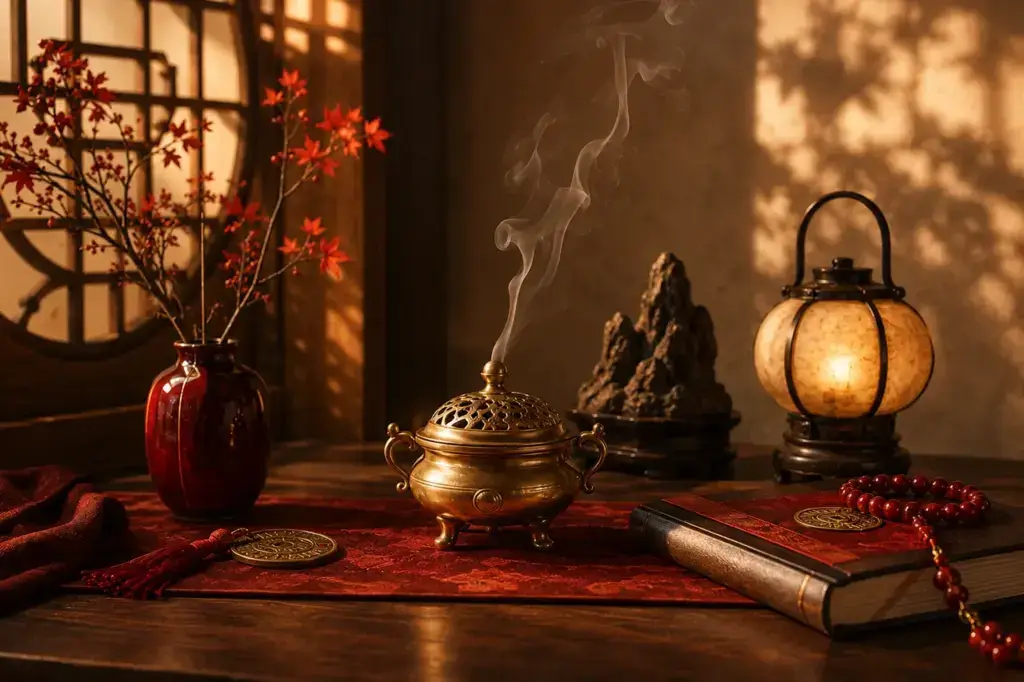
Daoist-inspired living is not only theoretical. It can also be practical, visual, and spatial.
Here, “balance Fire energy” does not mean forcing a guaranteed result through objects. A more grounded way to understand it is this: use color, material, light, and placement as reminders that shape your environment and daily awareness
Scenario A: When Fire Feels Too Weak
A room with weak Fire may feel cold, dull, flat, or uninspiring. This often happens in overly minimal spaces with too much white, gray, metal, plastic, or harsh functional lighting.
You may also feel this in a home office where everything is technically clean, but nothing feels alive.
Fire Element Home Office Decor: How to Feed Weak Fire Naturally
Instead of adding chaotic bright red plastic decor, lean into tactile warmth.
Introduce one carefully chosen object: a warm brass incense burner, a cinnabar-accented desk piece, a red cord detail, a copper-toned ornament, or a small Daoist-inspired symbolic object.
A thoughtfully placed brass incense burner on a desk can act as an aesthetic anchor. It is not a magical cure. It is a visual and sensory cue — a reminder to pause, breathe, gather attention, and return to focused creative presence.
Scenario B: When Fire Feels Too Strong
A room with excessive Fire may feel loud, crowded, bright, or emotionally intense. Too many red objects, strong lights, shiny surfaces, and symbolic items can create sensory overload.
This is where Fire needs grounding.
How to Soften Excess Fire
Use Earth and Water qualities in a subtle way.
Add ceramic, stone, natural textures, neutral backgrounds, deep blue accents, softer lighting, and more empty space. Reduce visual noise. Let one meaningful object breathe instead of surrounding it with many competing symbols.
For example, if you already have a red or cinnabar-accented piece, place it on a calm wooden shelf or neutral desk rather than against a busy background.
Pair a Fire-inspired accent with home decor to create a warmer, calmer visual rhythm.
Daoist Fire Element Symbolism in Modern Decor
Fire Element decor does not need to be dramatic.
A refined Fire-inspired space may use:
- One red accent instead of many
- Warm light instead of harsh brightness
- Brass or copper instead of cold shine
- Cinnabar details instead of loud color blocks
- Clean symbolic lines
- A calm desk, shelf, or entryway placement
For Daoism Light, a Fire-inspired object is not a magic tool. It is a contemplative anchor.
It holds meaning, beauty, and cultural memory. It invites the viewer to pause, breathe, and return to intention.
This is where symbolic decor becomes more than decoration. It becomes a quiet conversation between space and mind.
Explore Daoist symbol collections inspired by Wu Xing, Yin Yang, Bagua, and traditional visual culture.
How to Choose a Fire-Inspired Daoist Object
Look for Warmth
Choose objects that feel visually warm. Brass, copper, cinnabar red, soft red cord, warm wood, and candle-like glow all express Fire beautifully.
Look for Clarity
Fire is connected with visibility. Clear lines and recognizable symbolic forms often express Fire better than overly complex decoration.
Look for Cultural Respect
A good Daoist-inspired object should feel respectful, not theatrical. It should carry meaning without turning tradition into exaggerated marketing.
Look for Everyday Use
The best symbolic objects are easy to live with. A pendant, key charm, incense burner, desk accent, or small home decor piece can bring Fire symbolism into daily life in a quiet and natural way.
Common Misunderstandings About the Fire Element
Misunderstanding 1: Fire Only Means Passion
Fire can include passion, but it is broader than that. It also represents warmth, visibility, expression, clarity, joy, and transformation.
Misunderstanding 2: More Fire Is Always Better
Wu Xing is about relationship and proportion. Too much Fire can feel overwhelming. Balanced Fire feels warm, clear, alive, and focused.
Misunderstanding 3: Fire Symbolism Guarantees Career Growth
Fire symbolism can represent visibility, confidence, and expression, but it does not guarantee career growth, recognition, success, or wealth.
A more grounded way to use Fire symbolism is to treat it as a visual reminder: show up clearly, communicate with warmth, and keep meaningful work visible.
Misunderstanding 4: Fire Decor Must Be Bright Red
Fire can be expressed through warm lighting, copper tones, cinnabar details, sunlight, candle glow, triangular forms, or visual brightness. It does not need to dominate the room.
FAQ
Q1: What is the Fire Element Meaning in Wu Xing?
The Fire Element in Wu Xing represents warmth, light, visibility, expression, transformation, joy, and outward movement. It is traditionally connected with summer, the South, red tones, brightness, and the peak of Yang expression.
Q2: What is Wu Xing fire element personality?
A Wu Xing fire element personality often shows warmth, expressiveness, enthusiasm, creativity, and strong social presence. It should be understood as a symbolic tendency, not a fixed identity or personality diagnosis.
Q3: What is the difference between Yin Fire and Yang Fire?
Yang Fire is like the sun: bright, open, direct, and visible. Yin Fire is like candlelight or starlight: subtle, refined, intuitive, and inward. Both belong to Fire, but they express Fire differently.
Q4: How can I balance fire energy at home?
You can balance Fire symbolism at home through warm lighting, red or cinnabar accents, brass or copper details, wood elements, neutral backgrounds, and thoughtful placement. The goal is to create warmth and clarity, not visual overload.
Q5: Does Fire Element decor bring guaranteed success?
No. Fire Element decor does not guarantee success, recognition, wealth, or personal transformation. It is better understood as cultural symbolism, aesthetic expression, and a contemplative reminder in daily life.
Q6: What color represents the Fire Element in Wu Xing?
Red is the primary color associated with Fire. Warm red, crimson, cinnabar, copper tones, bright orange, and soft warm light can also express Fire symbolism in design.
Conclusion: Fire as Meaningful Illumination
Fire Element Meaning in Wu Xing is ultimately about illumination.
Fire shows what has grown. It brings warmth to what feels cold, visibility to what has been hidden, and movement to what has been waiting.
In modern life, Fire symbolism can remind us to live with clarity, warmth, and expressive presence. It does not need to be loud. It does not need to promise anything. Its quiet strength lies in helping us notice light, intention, and transformation in everyday spaces.
For Daoism Light, Fire is not a mystical claim. It is a visual and cultural language that brings warmth, focus, and symbolic beauty into modern homes, workspaces, and personal objects.
Author Note
Written by the Daoism Light editorial team, this article was created for readers who want to explore Daoist symbols in a clear, modern, and culturally respectful way.
Here, we approach Daoist-inspired objects through their symbolic depth, historical background, and thoughtful role in everyday life. We do not present these pieces as magical guarantees or exaggerated spiritual shortcuts. Instead, we see them as cultural, aesthetic, and contemplative anchors — meaningful accents that bring a sense of intention, balance, and quiet beauty into modern spaces.