
Daoism
Shan Gui Coin Meaning: The Daoist Mountain Spirit Protection Talisman
Discover the meaning of the Shan Gui Coin, a traditional Daoist protection talisman symbolizing spiritual protection, balance, and harmony with natural energy.

Shan Gui Coin Meaning: The Daoist Mountain Spirit Protection Talisman
What Is a Shan Gui Coin?
The Shan Gui Coin is one of the most fascinating traditional Chinese charm coins associated with Daoist culture and symbolic protection.
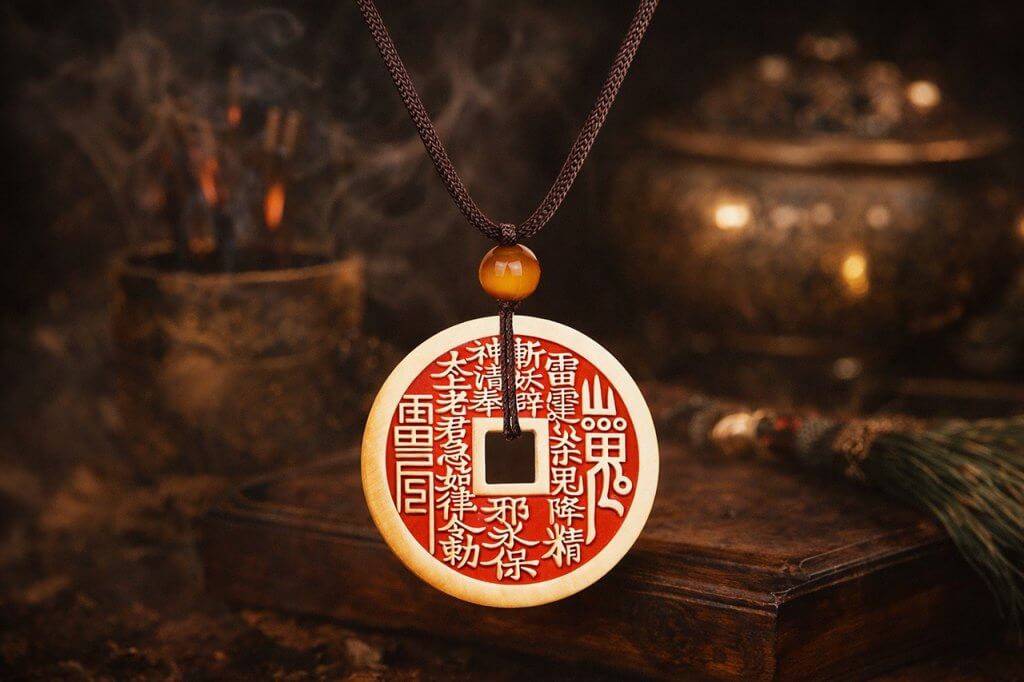
Unlike ordinary coins used as currency, Shan Gui coins were created as protective talismans. These coins often feature mysterious inscriptions, Bagua trigrams, or ancient symbolic characters that represent spiritual balance and protection.
The name “Shan Gui” (山鬼) translates to Mountain Spirit. In ancient Chinese folklore, mountain spirits were believed to guard sacred mountains and watch over travelers crossing remote wilderness.
Because mountains were seen as places where powerful natural energy gathered, invoking the Mountain Spirit symbolized aligning oneself with the protective forces of nature.
For this reason, Shan Gui coins became widely used as portable protective charms, carried by individuals seeking harmony, stability, and spiritual protection.
The Ancient Legend of the Mountain Spirit
The concept of the Mountain Spirit can be traced back over two thousand years to classical Chinese literature such as the Songs of Chu.
In these ancient poems, the Mountain Spirit is described as a mysterious guardian of the wilderness—both elegant and powerful.
Over time, Taoist folklore adopted this figure as a symbolic protector of travelers, villages, and sacred landscapes.
Because of this belief, objects invoking the Mountain Spirit became powerful cultural charms.
The Shan Gui coin emerged as one of these objects—combining mythology, philosophy, and craftsmanship into a small talisman designed to symbolize protection.
The Symbolic Design of the Shan Gui Coin
What makes the Shan Gui coin particularly unique is its layered symbolic design. Each element on the coin reflects a concept rooted in Daoist cosmology.
Daoist Talismanic Scripts
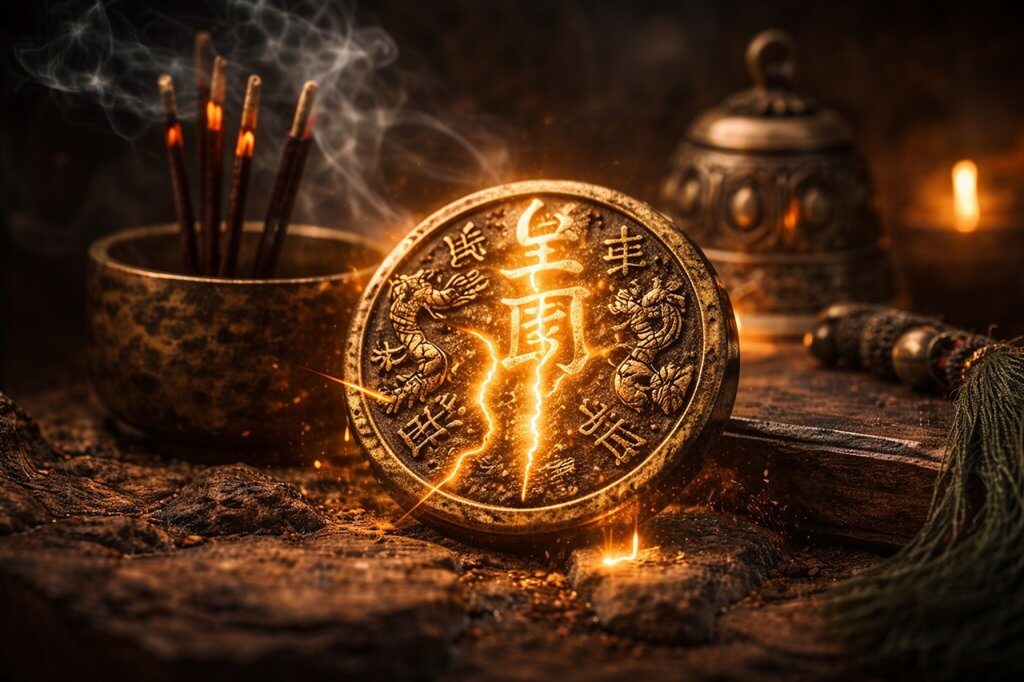
Many Shan Gui coins feature mysterious characters inspired by Daoist talisman writing.
Historically, these scripts symbolized spiritual authority and protective intention.
Dragon and Tiger Guardians
Some designs incorporate Dragon and Tiger imagery, representing the balance of powerful cosmic forces.
These guardians symbolize strength, vigilance, and protection.
Bagua (Eight Trigrams)
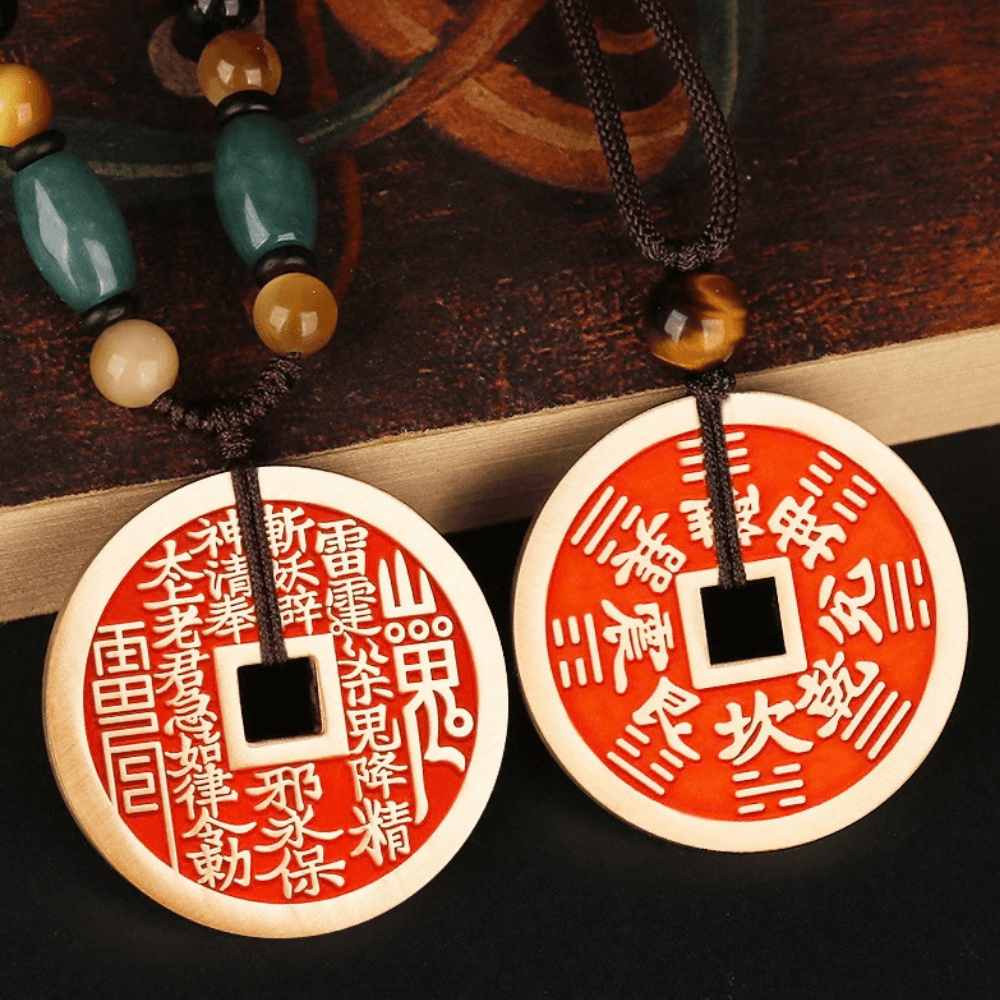
The reverse side of many Shan Gui coins displays the Bagua, the symbolic system used in the I Ching to represent patterns of change in the universe.
The Bagua acts as a symbolic compass, reminding us that harmony arises when energies remain balanced.
Why Shan Gui Coins Are Associated with Protection
In traditional Chinese thought, symbols often represent deeper philosophical ideas rather than literal supernatural claims.
The Shan Gui coin therefore represents a symbolic shield.
It reminds its bearer to stay grounded, balanced, and aligned with natural forces.
Because of these meanings, people historically carried Shan Gui coins to symbolize:
- protection from harmful influences
- spiritual balance
- harmony with nature
How People Use Shan Gui Coins Today
Although rooted in ancient culture, Shan Gui coins are still appreciated today.
Personal Protective Charm
Many people wear Shan Gui coins as:
- pendants
- bracelets
- keychains
These serve as cultural symbols of protection and balance.
Feng Shui Home Decoration
Some place Shan Gui coins near:
- home entrances
- workspaces
- living rooms
as reminders of stability and protection.
Travel Companion
Because of their historical association with travelers, Shan Gui coins are often carried during journeys as symbolic guardians.
Authentic Bronze vs Mass-Produced Replicas
| Feature | Authentic Shan Gui Coin | Mass Produced Replica |
|---|---|---|
| Material | Brass or bronze | Zinc alloy |
| Craftsmanship | Cast texture and depth | Flat machine engraving |
| Symbolism | Complete talismanic strokes | Often simplified |
| Cultural value | Traditional symbolism | Mostly decorative |
Authentic bronze coins are often valued because the material develops a natural patina over time, which many collectors appreciate.
Why Shan Gui Coins Are Gaining Global Interest
In recent years, more people have become interested in Eastern philosophy and symbolic culture.
The Shan Gui coin stands out because it combines:
- mythologyd
- artistic craftsmanship
- philosophical symbolism
Rather than requiring belief, many modern readers see the Shan Gui coin as a cultural symbol reminding people to seek balance and harmony with nature.
FAQ
What does the Shan Gui coin symbolize?
The Shan Gui coin symbolizes protection, balance, and connection with the natural forces represented by the Mountain Spirit.
Is the Shan Gui coin real money?
No. Shan Gui coins are charm coins created as symbolic talismans rather than currency.
Can Shan Gui coins be worn as jewelry?
Yes. Many modern designs turn Shan Gui coins into pendants or keychain charms.
Where should a Shan Gui coin be placed?
Common placements include keychains, necklaces, home entrances, and workspaces.
Discover Daoist Protection Talismans
Discover Daoist Protection TalismansIf you are interested in traditional Daoist protective symbols such as the Shan Gui coin, explore our collection of Daoist-inspired talismans and protective jewelry, designed to symbolize balance, protection, and harmony.
To better understand the deeper cultural context behind the Shan Gui Coin, you can also read our guide to Daoist Symbols and Their Meaning
Many Shan Gui Coins feature the Bagua on the reverse side. To understand what this symbol represents, read Bagua Meaning Explained or Early Heaven Bagua vs Later Heaven Bagua