Daoism
Daoist Symbols and Their Meaning: How Ancient Signs Guide Balance in Modern Life
Explore the power of Daoist symbols in modern life. Learn how symbols like Yin-Yang, Bagua, and the Five Elements can help you achieve balance, clarity, and a deeper connection with nature.
Daoist Symbols and Their Meaning: How Ancient Signs Guide Balance in Modern Life
Why Daoist Symbols Still Matter Today
In today’s fast-paced world, many individuals are overwhelmed by constant stimulation and the pressure of productivity. Amidst this rush, there’s a growing sense of imbalance—not just in our work or relationships, but a deeper disconnection from our natural rhythms. This is where Daoist symbols re-enter the scene.
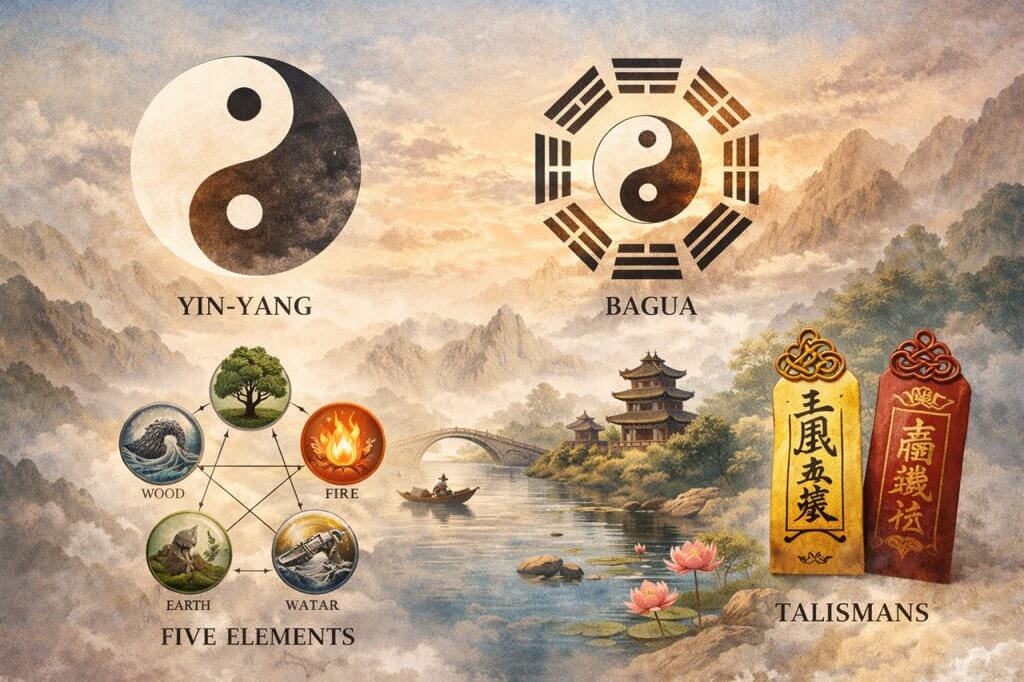
Daoist symbols are not merely decorative or religious icons. They are practical tools designed to guide us toward balance and awareness. These symbols, such as Yin-Yang, the Bagua, and the Five Elements, represent complex aspects of nature, change, and human behavior in a visual language that our minds can intuitively grasp.
For modern readers, Daoist symbols do not require belief. They simply invite understanding. And it is this understanding that can transform how we engage with life, guiding us to a deeper connection with ourselves, others, and the world around us.
What Are Daoist Symbols?
Daoist symbols are visual representations of the deeper workings of life. They are not designed to predict the future or promise outcomes. Instead, these symbols help us recognize natural patterns that are often hard to articulate, such as:
- The constant flow of change and impermanence
- The balance between opposing forces
- The relationship between humans and nature
- The cycles of time and natural flow
The true value of these symbols lies in cultivating awareness. When used intentionally, they act as reminders, guiding our perception and awareness without controlling outcomes.
Yin-Yang (Taiji): The Core Symbol of Daoist Balance
What Yin-Yang Truly Represents
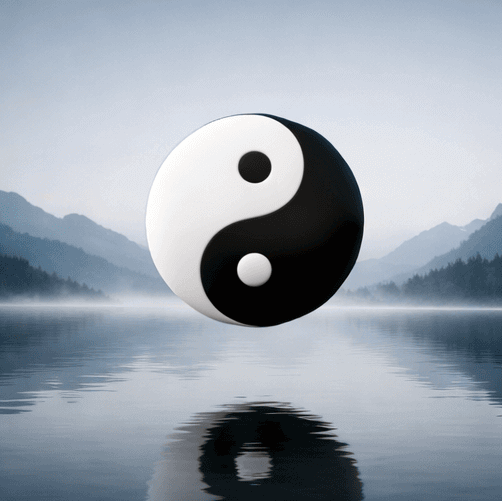
The Yin-Yang symbol is often simplified as a symbol of opposites—light and dark, good and bad. But in Daoism, Yin and Yang represent a more nuanced concept: interdependence. These forces are not separate or opposing; they are complementary, each containing the seed of the other. Yin and Yang are dynamic—constantly shifting and evolving in harmony.
Yin-Yang in Modern Life
In modern culture, we often reward constant motion and output. However, the Yin-Yang symbol reminds us that balance involves both action and rest, expansion and contraction, light and dark. In a world obsessed with speed and efficiency, Yin-Yang teaches us that rest and reflection are essential for sustainability. Without balance, we risk burnout and fatigue.
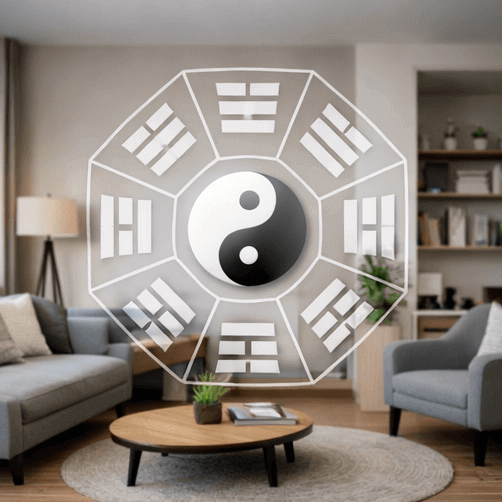
The Bagua: Understanding Life Through Patterns and Movement
What the Bagua Represents
The Bagua is a system of eight trigrams used to describe how energy moves and interacts within various aspects of life. Each trigram represents an essential force, such as:
- Qian (Heaven): Initiative, leadership, creative force
- Kun (Earth): Receptivity, stability, nourishment
- Kan (Water): Depth, adaptability, reflection
- Li (Fire): Clarity, insight, awareness
Rather than categorizing events as simply “good” or “bad,” the Bagua helps reveal the structure behind change. It provides insight into the cyclical nature of life and offers clarity on how energy shifts within us and our surroundings.
Why the Bagua Resonates with Modern Thinkers
In modern psychology and systems thinking, we understand that life follows repeating patterns. The Bagua provides a framework for recognizing and analyzing these patterns. It helps us observe:
- Why certain challenges recur
- Where energy is being depleted
- Which areas of life need adjustment
By revealing the underlying structure of change, the Bagua transforms confusion into clarity.
The Five Elements (Wu Xing): A Symbolic Map of Change
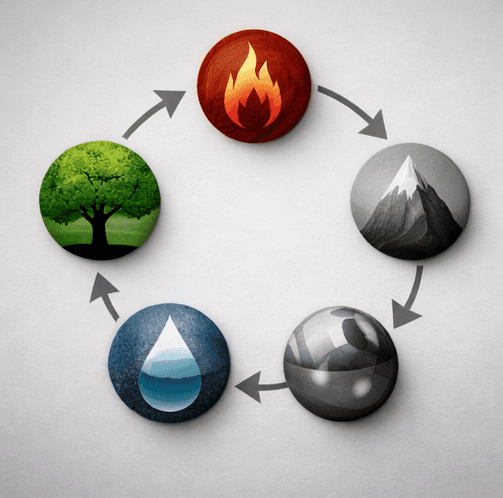
What the Five Elements Really Are
In Daoism, the Five Elements are not physical substances; they represent phases of transformation that are constantly in motion:
- Wood: Growth, initiation, creativity
- Fire: Expansion, expression, vitality
- Earth: Integration, grounding, stability
- Metal: Refinement, structure, release
- Water: Rest, restoration, depth
The key concept is continuous movement—nothing is fixed or static.
How the Five Elements Reduce Anxiety
Rather than asking, “Why am I stuck?” Daoism shifts the focus to “Which phase am I in?” This reframing helps us see stagnation as a natural part of the process, not a failure. The Five Elements provide a map for understanding where we are in the cycle of change and how to navigate the transitions.
Daoist Talismans and Symbolic Objects: Tools for Focus and Awareness
A Common Misunderstanding
Daoist symbols and talismans are often misunderstood as tools that magically alter fate. In traditional Daoism, their function is much more subtle. They are psychological anchors—tools for focus and intention that help to stabilize emotional states, reinforce awareness, and align attention with balance.
Why Symbols Influence Behavior
The human mind naturally responds to symbols. A meaningful symbol can affect our emotions, attention, and decision-making more effectively than abstract ideas. This is why symbolic systems are present in cultures worldwide—not as superstition, but as tools that influence behavior.
How Daoist Symbols Are Used in Modern Life
In today’s world, Daoist symbols are used more subtly than in traditional rituals. Common applications include:
- Wearing symbolic jewelry as personal reminders of balance and clarity
- Placing symbols in work or living spaces to enhance focus and calm
- Using symbols during periods of reflection or transition
Their true value doesn’t depend on belief but on consistent engagement. The symbols don’t change destiny; they change how we engage with and perceive our experience.
Daoist Symbols vs Decorative Symbols
Decorative symbols emphasize appearance, while Daoist symbols emphasize meaning and function. For Daoist symbols to be effective, they must:
- Be understood at a basic level
- Be relevant to the individual’s current state
- Be used intentionally and consistently
Without understanding, even the most beautifully crafted symbol remains superficial.
Why Daoist Symbols Continue to Attract Modern Seekers
Daoist symbols continue to resonate with modern seekers because they are:
- Non-dogmatic: No required belief system
- Practical: Focused on balance, not miracles
- Psychologically aligned: Enhance awareness and self-regulation
- Adaptable: Fit modern life without complex rituals
Daoism does not ask us to escape reality. It teaches us how to engage with life thoughtfully, with clarity and stability.
Symbols Offer Guidance, Not Guarantees
Daoist symbols do not promise protection, success, or certainty. They offer something deeper:
- Clarity rather than control
- Balance rather than extremes
- Guidance rather than guarantees
In a noisy, fast-paced world, Daoist symbols offer quiet reminders that point towards harmony and balanced living.