Feng Shui
Daoist Home Decor Placement: Taoist Wall Decor Guide
Daoist home decor placement guide for modern homes. Learn where to hang Taoist charms, Bagua decor, brass plaques, and Feng Shui wall art.
Daoist Home Decor Placement: How to Hang Taoist Wall Decor at Home
Introduction
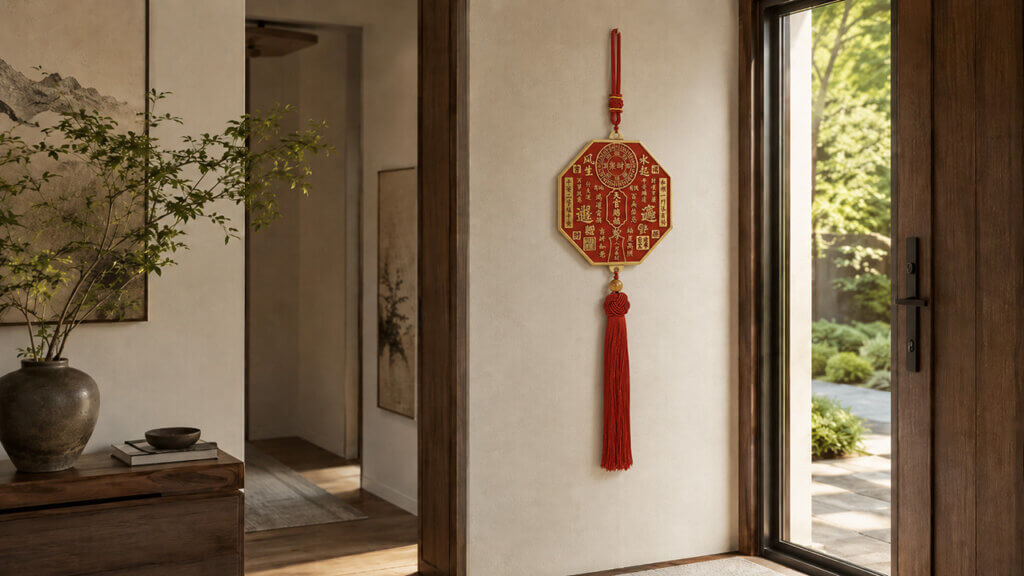
Daoist home decor placement is not only about filling an empty wall. In Taoist culture, a wall hanging, brass plaque, talisman-inspired charm, Bagua symbol, Five Emperor Coin ornament, or Taiji design can act as a meaningful anchor inside the home.
A well-placed piece can shape the feeling of a room. Near the entrance, it may suggest welcome and protection. In the living room, it can bring balance and cultural depth. In a study, it may support focus and direction. In a shop or studio, it can become part of the atmosphere people remember.
This does not mean Taoist objects should be treated as magical cures. A more respectful approach is to understand the symbol, the room, the material, and the feeling you want the space to carry. When these elements work together, Taoist wall decor becomes more than decoration. It becomes part of how a home feels.
If you are choosing your first piece, start with a clear purpose: protection, balance, focus, blessing, or quiet reflection. You can explore Daoism Light’s Daoist home decor collection for wall hangings, brass plaques, and symbolic ornaments designed for modern living spaces.
Why Daoist Home Decor Placement Matters
Interior design often begins with color, furniture, lighting, and proportion. Taoist and Feng Shui-inspired placement adds another layer: the relationship between object and space.
A wall is not just a background. It shapes how a room feels. A brass plaque near the entrance creates a different impression from a soft Taiji ornament in a bedroom. A Five Emperor Coin hanging beside a shop door feels different from the same piece placed in a crowded storage corner.
In Taoist thought, good placement should support flow rather than create pressure. A symbolic object should feel like it belongs to the room. It should not block movement, overwhelm the eye, or compete with unrelated items.
Treat the Wall as Part of the Space
A wall without decoration is not necessarily empty. Empty space has value. In Taoist aesthetics, balance often comes from the relationship between presence and openness.
This is why one carefully chosen wall hanging can feel stronger than several objects placed together. The space around the object gives it dignity.
Meaning Comes from Symbol, Material, and Location
A symbol gains meaning through context. A Taiji symbol in a quiet reading corner feels reflective. A brass door charm at the entrance feels protective. A Five Emperor Coin hanging near a business entrance feels auspicious and welcoming.
Placement gives the symbol its final context.
Classical Note: Balance and Natural Placement
A helpful Taoist reference comes from Chapter 42 of the Dao De Jing: “All things carry Yin and embrace Yang; harmony arises through the movement of Qi.” In home placement, this idea does not need to become a rigid decorating rule. It simply reminds us that a room should not feel too heavy, too crowded, too empty, or visually aggressive.
Chapter 25 of the Dao De Jing also says that human beings follow Earth, Earth follows Heaven, Heaven follows Dao, and Dao follows what is natural. For home decor, this points to a simple idea: the best placement should feel natural to the room, not forced.
For Taoist wall decor, this means the object should support the space rather than dominate it. A well-placed charm, plaque, or symbolic ornament should feel integrated into daily life.
Three Principles Before You Hang Taoist Wall Decor
1、Match Yin and Yang to the Room
Some rooms are naturally more Yang. These include the entryway, living room, office, studio, and shop entrance. They are active spaces where people move, gather, work, and meet others.
Yang spaces can hold stronger symbols, brighter materials, and more visible decor. Brass plaques, Bagua-inspired ornaments, Five Emperor Coin hangings, and auspicious door charms often work well here.
Other rooms are more Yin. These include the bedroom, meditation corner, reading nook, and resting area. These spaces are connected with sleep, recovery, privacy, and quietness.
Yin spaces need softer symbols. A simple Taiji piece, gentle landscape-inspired decor, or small brass charm may work well. Heavy, fierce, sharp, or overly complex spiritual imagery should be avoided in resting areas.
2、Consider the Five Elements and Materials
Taoist and Feng Shui-inspired decor often connects with the Five Elements: Wood, Fire, Earth, Metal, and Water. This does not need to be complicated. A simple material-based understanding is enough for most homes.
Wood brings warmth and growth.
Metal, including brass and copper, brings structure, clarity, and weight.
Earth-related colors, stone, and ceramics feel grounding.
Water imagery suggests flow and movement.
Fire-related colors and light bring visibility and energy.
For Taoist wall decor, brass and copper are especially suitable for entryways, living rooms, studios, and shop entrances because they carry visual weight and lasting material presence. To understand this symbolism more deeply, read our guide to the Five Elements meaning in Feng Shui
3、Let the Symbol Support the Room
A Taoist object should support the function of the room. If the room is for rest, the symbol should feel calm. If the room is for work, it should feel focused. If the room is for welcoming people, it should feel open and respectful.
Do not choose a symbol only because it looks powerful. Choose it because it fits the space.
Visual Placement Guide: Correct vs. Avoid
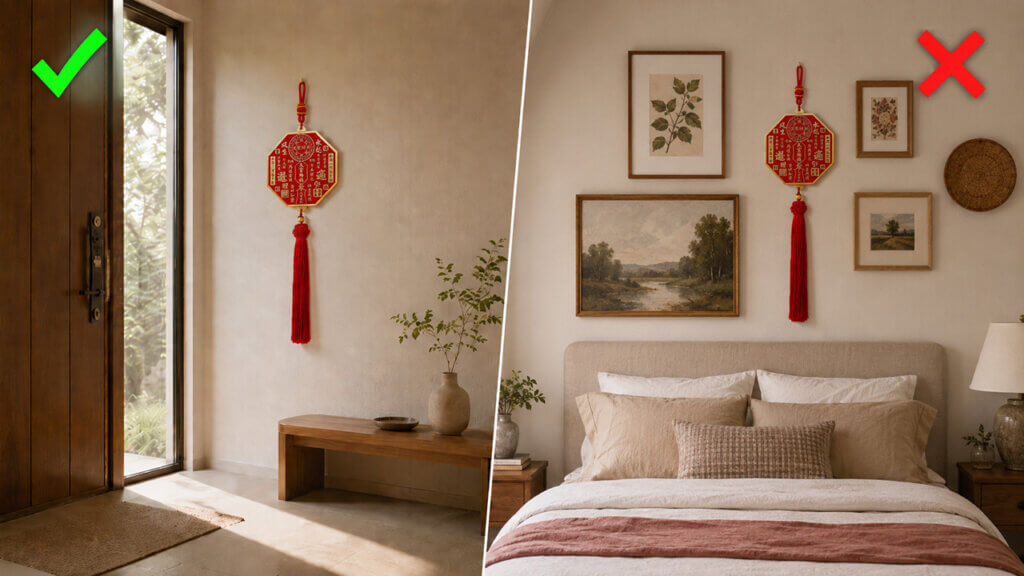
Before choosing a final location, it helps to look at placement visually. Taoist wall decor works best when the object has enough space around it, does not block movement, and feels naturally connected to the room.
Better Placement
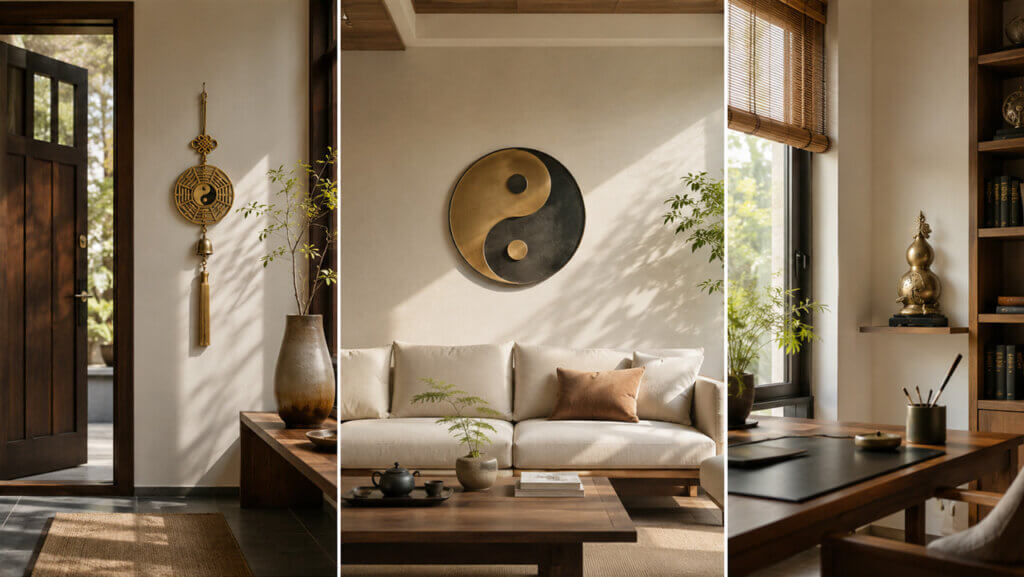
A better placement usually has three qualities: clear visibility, enough empty space, and a stable relationship with the room. For example, a brass door charm beside the entrance, a quiet Yin and Yang inspired ornament on a living room wall, or a small symbolic piece on a study shelf can feel balanced without overwhelming the space.
Placement to Avoid
Avoid placing Taoist decor where it feels crowded, unsafe, or visually tense. This includes heavy plaques directly above the bed, mirrors facing the sleeping area, sacred-looking symbols near trash bins, or too many spiritual objects gathered on one small wall.
A useful rule is simple: if the object makes the room feel clearer, calmer, or more complete, the placement is likely working. If it makes the space feel heavy or crowded, choose a quieter location.
Best Places to Hang Daoist Home Decor
1、Entryway: Protection, Welcome, and Transition
The entryway is usually the best place to begin. In Feng Shui language, the main door is often understood as the place where Qi enters the home. In practical terms, the entrance is where the outside world meets private life.
This makes it ideal for protective, welcoming, and blessing-themed decor.
Good choices for the entryway include Taoist brass plaques, Five Emperor Coin hangings, Tian Guan blessing ornaments, Taiji Bagua-inspired pieces, and simple protective charms.
The piece should be easy to see but not intrusive. It should not block the door, hit the wall when the door opens, or hang so low that people brush against it.
For entryway pieces, a refined brass or copper design often works better than fragile paper or fabric because the entrance is a high-movement area.
Best Entryway Placement
Place the charm beside the door, above the inner entry wall, or on a clean wall facing the entrance. If it has a tassel, leave enough space for the tassel to hang naturally.
Important Note on Bagua Mirrors
A real Bagua mirror is different from general Bagua-style wall decor. Traditionally, a Bagua mirror is an exterior protective object used to reflect harsh outside forms.
It should never be hung inside the house facing inward. This is one of the most important placement rules.
If you are unsure, choose Bagua-inspired decor rather than an actual mirror. Decorative Bagua patterns are easier to integrate indoors and feel less intense. Before choosing one, it helps to understand Bagua symbols and their meanings.
2、Living Room: Harmony, Culture, and Presence
The living room is a shared space. It reflects the character of the home and is often the first full room guests experience.
Taoist wall decor in the living room should feel balanced rather than aggressive. This is a good place for Taiji symbols, mountain-inspired designs, Five Elements artwork, brass ornaments, or refined Bagua-inspired decor.
If using landscape imagery, mountains can suggest support and stability, while flowing water can suggest movement and abundance. In traditional Feng Shui interpretation, water imagery should visually flow into the home rather than out toward the door.
A living room piece should also match the scale of the wall. A very small charm may look lost on a large wall. A heavy, oversized piece may feel overwhelming in a compact room.
Best Living Room Placement
Choose one main wall or a quiet side wall. Leave enough empty space around the piece. One clear focal piece is usually better than many unrelated symbols.
A single brass wall hanging with clear cultural meaning often looks more refined than a crowded collection of small charms. If you want to understand balance and complementary forces more deeply, our guide to Yin and Yang meaning is a helpful next read.
3、Study or Home Office: Focus and Direction
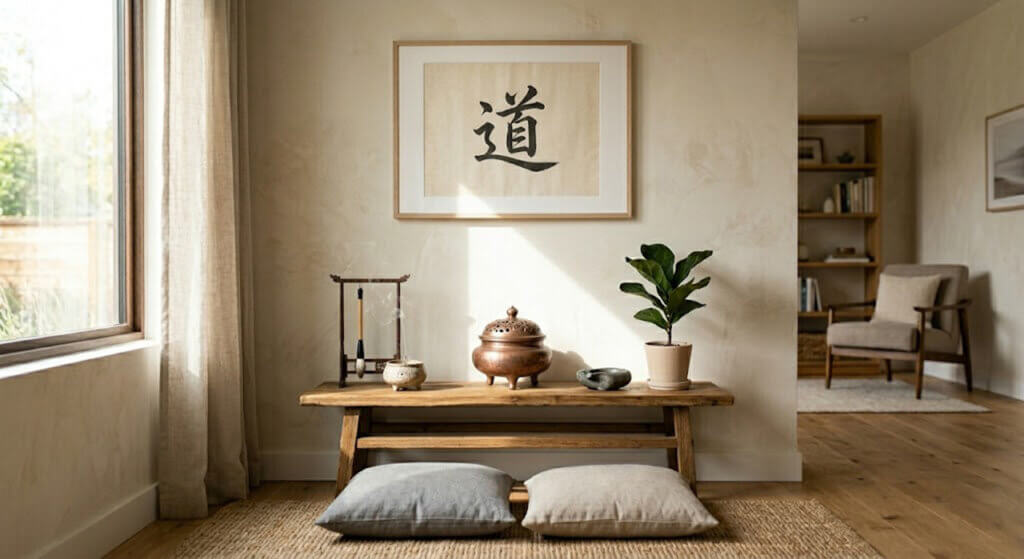
A study, writing desk, or home office is a strong place for Taoist decor connected with clarity, timing, discipline, and direction.
Modern workspaces often hold screens, cables, notes, and visual noise. A calm Taoist wall hanging can help organize the feeling of the space and remind the user to return to focus.
Good choices include Taiji designs, mountain symbols, trigram-inspired pieces, or simple brass ornaments.
Best Study Placement
Place the piece on a side wall, shelf, or area within view, but not directly behind the screen or in a visually distracting position.
4、Bedroom: Peace, Rest, and Soft Symbolism
The bedroom needs the most care. It is a Yin space connected with sleep, privacy, and recovery. Not every Taoist symbol belongs here.
Avoid heavy brass plaques directly above the bed. Avoid fierce imagery, intense talisman patterns, sword symbols, or strong protective designs facing the pillow.
A better choice is a small Taiji ornament, soft landscape-inspired decor, a minimal charm, or a peaceful symbol placed on a side wall.
The bedroom should feel calm first and symbolic second.
Best Bedroom Placement
Place gentle Taoist decor on a side wall, dresser area, or small shelf. Keep it away from the area directly above the headboard.
Do not hang heavy plaques or intense protective symbols directly above the bed. This is both a symbolic and practical safety concern.
5、Kitchen and Dining Area: Nourishment and Daily Abundance
The kitchen and dining area are connected with nourishment, family rhythm, and daily abundance. However, they also involve heat, moisture, oil, and frequent movement.
For this reason, paper talismans, delicate fabric, or highly sacred-looking objects are usually not ideal near the stove or sink.
If you want Taoist-inspired decor in this area, choose durable materials such as brass, copper, sealed wood, or framed artwork. Place it closer to the dining area rather than the busiest cooking zone.
Best Kitchen and Dining Placement
Keep the piece clean, dry, and visually separated from clutter. Avoid placing spiritual symbols near trash bins, greasy surfaces, or damp corners.
A small auspicious charm near a dining area can feel warm and appropriate, while the same object beside a stove may feel misplaced.
6、Shop, Studio, or Small Business Entrance
For a shop, studio, wellness room, or creative workspace, Taoist decor can support brand atmosphere.
A brass plaque, Five Emperor Coin hanging, auspicious charm, or refined symbolic ornament near the entrance can make the space feel more intentional and memorable.
This is especially useful when the object works both as decor and as cultural storytelling. Customers may not know the full meaning immediately, but they can sense when a space has care and identity.
Best Business Placement
Place the ornament near the entrance, reception area, product display wall, or checkout area. It should look welcoming, not intimidating.
For business spaces, choose clear symbols, durable materials, and clean presentation.
Quick Placement Reference by Symbol Type
| Symbol Type | Best Placement | Avoid |
|---|---|---|
| Taiji Symbol | Living room, study, meditation corner, bedroom side wall | Cluttered corners, bathrooms, crowded display areas |
| Bagua-Inspired Decor | Entryway, living room, study, cultural display wall | Too many Bagua objects in one small area |
| Bagua Mirror | Exterior front-door area only when appropriate | Inside the home, facing inward, facing the bed, or facing people directly |
| Five Emperor Coin Hanging | Entryway, shop entrance, office corner, checkout area | Bathrooms, messy storage spaces, directly above the bed |
| Talisman-Inspired Decor | Entryway, study shelf, personal altar area, clean display wall | Bathroom, floor-level placement, casual clutter |
| Brass Plaque or Door Charm | Main door interior, entry wall, shop entrance, studio entrance | Damp outdoor areas unless made for exterior use |
Common Placement Mistakes to Avoid
Hanging Too Many Symbols Together
A wall full of talismans, coins, mirrors, animals, calligraphy, and charms can feel chaotic. Symbolic objects need space.
Choose one main purpose for each area: protection, calm, prosperity, focus, or harmony. Too many competing symbols can weaken the meaning of each piece.
Placing Strong Symbols in Resting Areas
Strong protective symbols are better for entryways and active areas. Bedrooms need gentle visual energy.
If a piece feels too intense for rest, move it to a hallway, study, or entryway instead.
Hanging Mirrors Opposite the Bed
From both Feng Shui and practical interior perspectives, mirrors facing the bed can make a room feel visually restless.
If a mirror is necessary, place it where it does not directly reflect the sleeping area. Avoid mirrors directly facing the bed.
Ignoring Weight and Safety
Heavy brass or copper items should be securely mounted. Tassels need space to hang. Paper or fabric pieces should be protected from moisture.
Good placement is cultural, visual, and practical.
Treating Sacred Symbols as Random Decoration
Taoist symbols have cultural context. Even if you are not religious, it is better to use them with understanding.
A respectful product description, blog explanation, or display choice makes the object feel more meaningful and helps visitors understand why it belongs in the space.
How to Choose the Right Taoist Decor for Your Home
Before choosing a product, start with the room.
Ask these questions:
What does this space need more of: calm, protection, focus, welcome, or abundance?
Is this room more Yin or more Yang?
Is the material suitable for the location?
Will the object have enough space around it?
Does the symbol match the feeling of the room?
For an entryway, choose something protective and welcoming.
For a living room, choose something balanced and visually refined.
For a study, choose something clear and grounding.
For a bedroom, choose something soft and minimal.
For a shop entrance, choose something memorable and auspicious.
This approach makes the product feel personal instead of random.
A Simple Placement Test
Before hanging a piece, step back and ask: does this object make the room feel clearer, calmer, or more complete? If it makes the wall feel crowded, heavy, or visually tense, the placement is probably not right.
Good placement should feel natural after a few days of living with it. If the piece constantly draws attention in a distracting way, move it to a quieter wall or choose a smaller object.
Daoism Light Placement Philosophy
At Daoism Light, Taoist home decor is understood as cultural design for modern living.
A good piece should not rely on exaggerated promises. It should have clear symbolism, durable material, balanced proportions, and a placement that makes sense.
A brass plaque should feel grounded.
A tassel should move naturally.
A talisman-inspired piece should be explained with respect.
A Feng Shui ornament should support the home, not overwhelm it.
The best Taoist decor is not always the loudest piece. Often, it is the one that quietly changes how a space feels. You can learn more about the Daoism Light story and our approach to Taoist-inspired symbolic design.
FAQ
Where should I place Daoist home decor first?
Start with the entrance. It is the natural transition between the outside world and the private home, so protective or blessing-themed decor works well there.
Can I use Taoist wall decor if I am not Taoist?
Yes. You do not need to be Taoist to appreciate Taoist symbols, but you should use them respectfully. Understand the meaning, avoid exaggerated claims, and place them with care.
Should Taoist decor face the door?
Not always. Some protective pieces can face or be near the entrance, but many look better on a side wall near the door. The key is visibility, balance, and comfort.
Can I place a Taoist talisman in the bedroom?
It depends on the design. Gentle talisman-inspired decor may be acceptable, but strong ritual-looking talismans are usually better for entrances, studies, or dedicated display areas.
How high should I hang Taoist wall decor?
Eye level or slightly above eye level works well for most wall decor. More sacred-looking pieces may be placed slightly higher as a sign of respect.
Is Bagua decor the same as a Bagua mirror?
No. Bagua-inspired decor can be used as symbolic wall art. A real Bagua mirror has a stronger traditional function and should be handled with more care. It should never be hung inside the house facing inward.
Author Note
Written by the Daoism Light editorial team, this article is created for readers who want to understand Taoist symbols through clear, modern, and culturally respectful interpretation.
Our content focuses on symbolic meaning, traditional cultural context, and practical daily use. We avoid exaggerated spiritual promises and present Taoist-inspired objects as cultural, aesthetic, and reflective pieces.