
Daoism
Yin Yang Meaning Explained: Daoist Balance for Modern Life
Discover the true Yin-Yang meaning in Daoist philosophy and how this ancient symbol helps guide balance, decision-making, and clarity in modern life.
Yin Yang Meaning Explained: How Daoist Philosophy Guides Balance in Modern Life
What Is the True Yin-Yang Meaning in Daoism?
Yin-Yang meaning is often simplified into a symbol of balance or “opposites.”
But in Daoist philosophy, Yin and Yang describe something far deeper — the natural rhythm through which life moves, transforms, and restores itself.
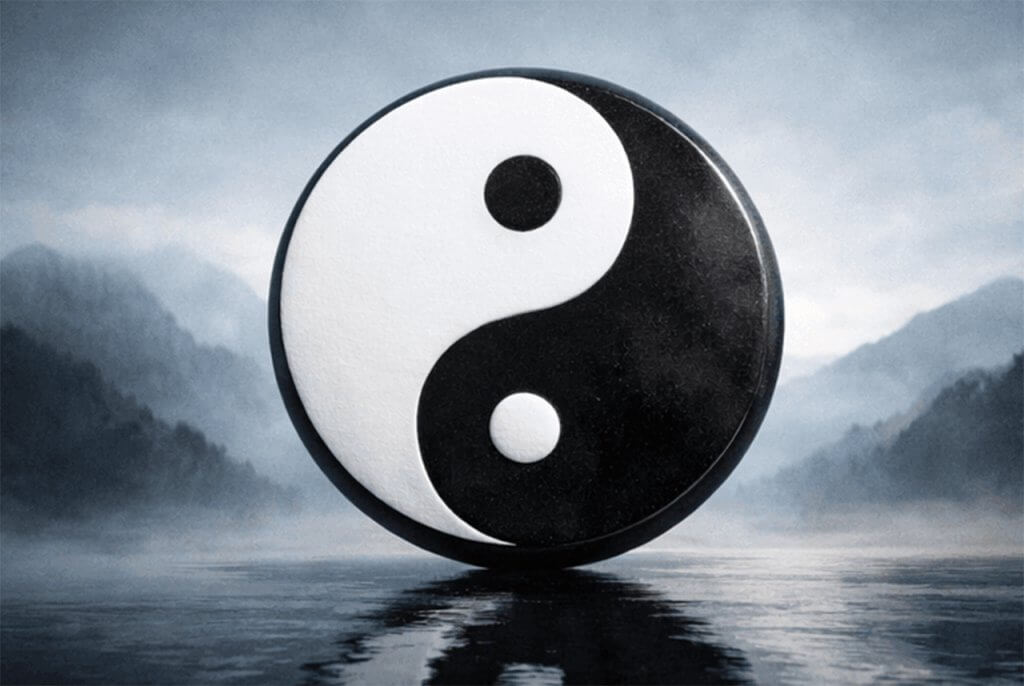
The famous black-and-white circle is not just decorative symbolism.
It is a visual map showing how all systems — nature, emotions, work, and decision-making — shift between phases of activity and recovery.
For many modern readers navigating stress, constant productivity, and information overload, the Yin-Yang symbol offers a practical framework for understanding when to act, when to wait, and when balance is already unfolding on its own.
Understanding Yin and Yang in Daoist Philosophy
Yin and Yang Are Complementary Forces
In Daoism, Yin and Yang are not enemies competing for dominance.
They are complementary qualities that exist together in every natural process.
Yin qualities include
- stillness
- receptivity
- rest
- inward focus
- depth
Yang qualities include
- movement
- expression
- activity
- expansion
- clarity
Neither side can exist alone.
Day becomes night.
Activity requires recovery.
Growth follows periods of stillness.
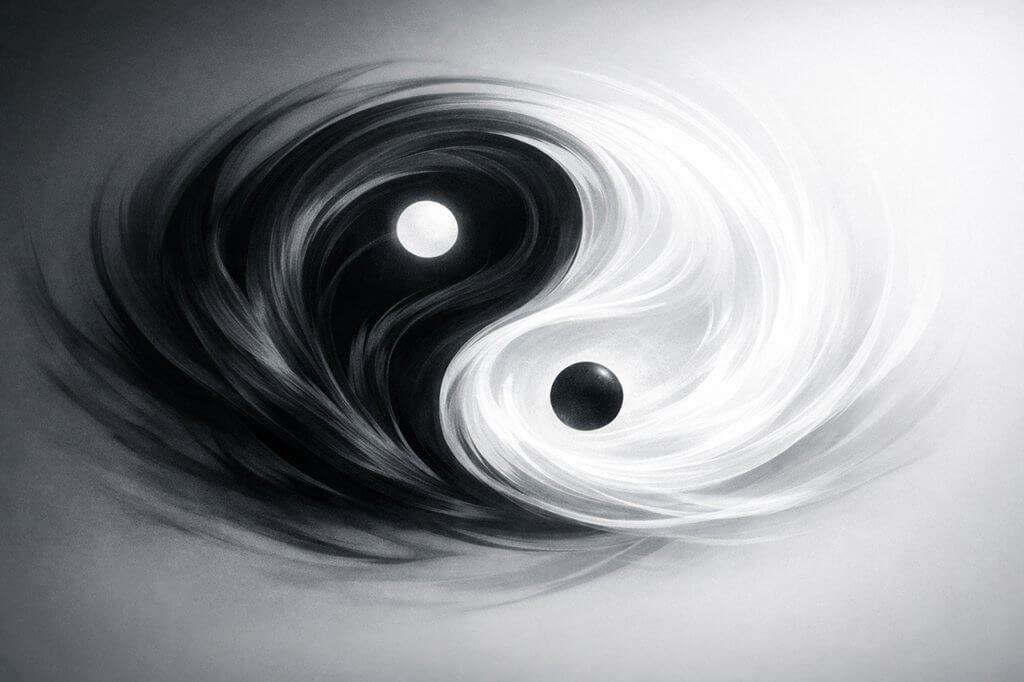
This is why the Yin-Yang symbol includes a small dot of the opposite color inside each half — reminding us that transformation is always already underway.
Yin-Yang Is a Dynamic Process
A common misunderstanding is that balance means maintaining equal Yin and Yang all the time.
Daoist philosophy teaches the opposite.
Balance is dynamic, not static.
Different moments call for different energies.
Some situations require decisive action (Yang).
Others require patience and observation (Yin).
Many modern problems emerge not from imbalance itself — but from forcing the wrong energy at the wrong moment.
How Yin-Yang Philosophy Applies to Modern Life


Work, Productivity, and Burnout
Modern work culture often encourages constant activity.
Deadlines.
Notifications.
Continuous productivity.
This environment strongly amplifies Yang energy.
Without enough Yin — rest, reflection, and recovery — people often experience
- mental fatigue
- emotional depletion
- loss of focus
Yin-Yang reminds us that sustainable success depends on cycles, not endless acceleration.
Decision-Making and Timing
One of the most practical aspects of Yin-Yang philosophy is timing.
Acting too early wastes energy.
Acting too late creates resistance.
Understanding Yin-Yang helps people recognize when conditions are
- developing
- stabilizing
- ready for action
Sometimes waiting is not hesitation — it is strategy.
Emotional Balance
Emotions naturally rise and fall.
Problems occur when people try to
- suppress emotions completely (excess Yang control)
- or become overwhelmed by them (excess Yin immersion)
Yin-Yang encourages awareness instead of suppression, allowing emotions to pass without dominating behavior.
Yin-Yang Symbolism in Modern Culture
Today the Yin-Yang symbol appears on
- jewelry
- meditation spaces
- tattoos
- wellness brands
When used intentionally, the symbol becomes a visual reminder of balance and awareness.
Many people keep Yin-Yang symbols nearby to reflect on questions like
- Is action necessary right now?
- Would patience create better outcomes?
- Am I forcing momentum where rest is needed?
The symbol does not promise outcomes.
Instead, it invites reflection.
Why Yin-Yang Philosophy Attracts Modern Western Readers
Several qualities make Yin-Yang philosophy appealing today:
✔ It is non-religious and accessible
✔ It aligns with modern psychology and mindfulness
✔ It applies to work, relationships, and creativity
✔ It offers guidance without rigid rules
Rather than rejecting ambition, Yin-Yang teaches how to sustain it without exhaustion.
Final Thought: Yin-Yang as a Guide to Awareness
Yin-Yang does not guarantee success or happiness.
Instead, it offers something more subtle:
- clearer judgment
- better timing
- reduced inner conflict
In a world that constantly demands more effort and speed, the Yin-Yang symbol asks a quieter question:
Is this the moment to push forward — or the moment to allow balance to return?
Frequently Asked Questions About Yin-Yang
What does Yin-Yang really mean?
Yin-Yang represents the natural interaction between complementary forces in life.
Rather than opposing each other, Yin and Yang work together to create balance, movement, and transformation.
Is Yin-Yang about good versus evil?
No. In Daoist philosophy, Yin and Yang are not moral categories.
Yin represents qualities like stillness and receptivity, while Yang represents movement and expression.
Both are necessary for harmony.
Why is the Yin-Yang symbol still popular today?
The symbol remains relevant because it reflects universal patterns that people experience in everyday life—work cycles, emotions, relationships, and decision-making.
Many people keepDaoist symbolic jewelry as a reminder of balance and awareness.
Discover the Symbol of Balance in Everyday Life
The Yin-Yang symbol has guided people for centuries as a reminder of harmony, timing, and awareness.
Today, many people keep Yin-Yang inspired objects in their daily space — not as superstition, but as a visual reminder to stay balanced in a fast-moving world.
Subtle symbols placed in a workspace, worn as jewelry, or displayed in a home environment can serve as quiet cues to pause, reflect, and return to clarity.